
MOAS odor abatement for commercial kitchens
Treat cooking odor before it leaves the building.
MOAS mists Odor Neutralizer Solution into your exhaust duct through two remote nozzles. A wall-mounted stainless-steel cabinet, fabricated in Colorado by a family business since 1986.
- Up to
- 95%*odor reduction
- Up to
- 6,000 CFM*per two-nozzle system
- Listing
- ETLUnited States and Canada
*Performance varies with cooking process, hood grease-removal performance, exhaust configuration, installation, dwell time and calibration. Results are not guaranteed. Capacity is subject to project-specific configuration; smoke reduction is not a particle-filtration rating.
Installation history includes






References identify installation history and do not imply endorsement, sponsorship, or a current commercial relationship.
Need smoke and grease filtration too? Meet EPFA
Cooking odor travels.
Kitchen exhaust can carry cooking odor to neighbors, guests and the street. MOAS treats that odor inside your exhaust duct, before the air is discharged.
- Sidewall and ground-level dischargeExhaust that leaves the building near sidewalks, patios, doors or windows.
- Shared and mixed-use buildingsKitchens below apartments, beside offices, or inside hotels and airports.
- Neighbors close byHomes and businesses within reach of the exhaust fan.
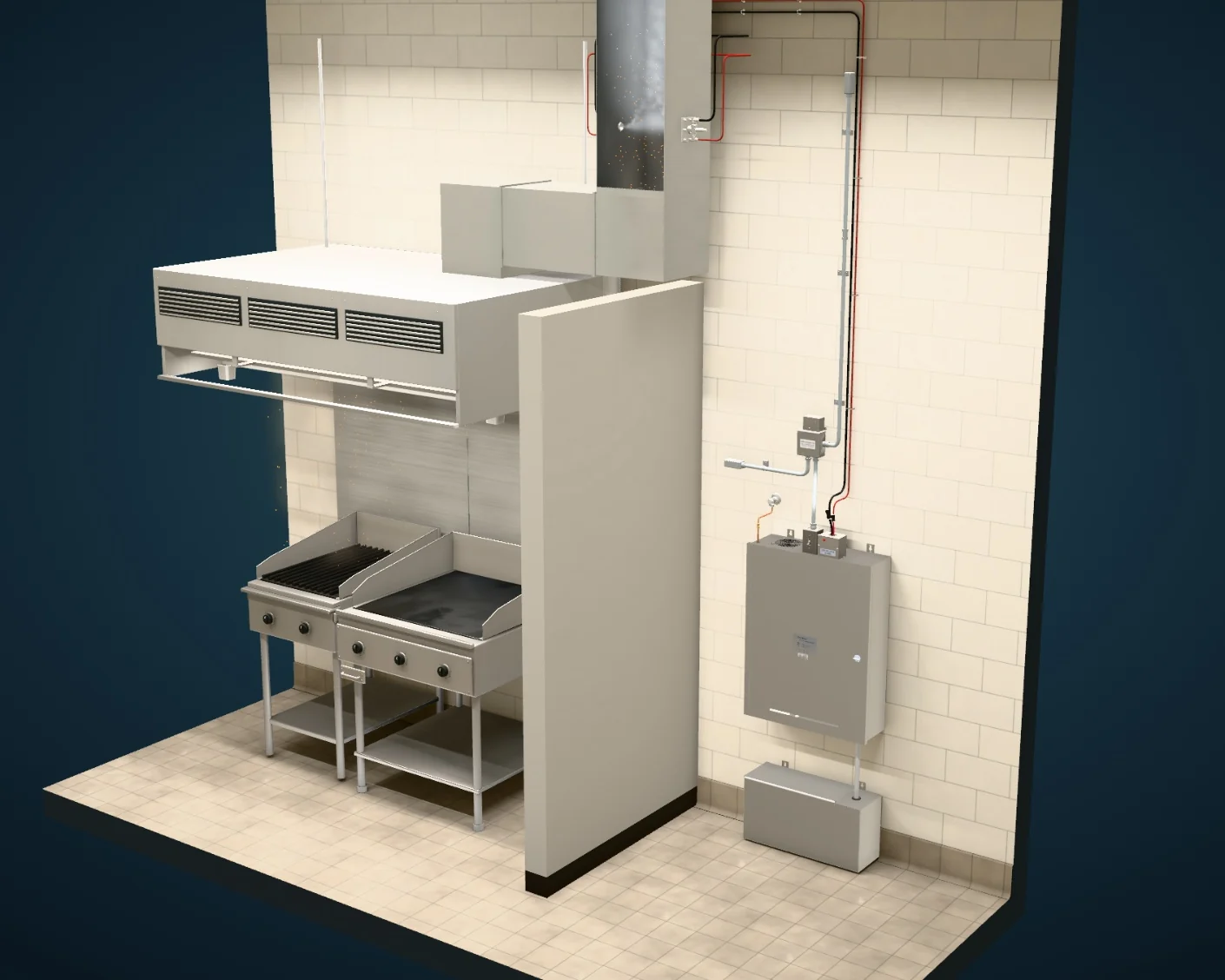
How MOAS works
A cabinet on the wall, two nozzles on the duct. Everything happens while your exhaust fan runs.
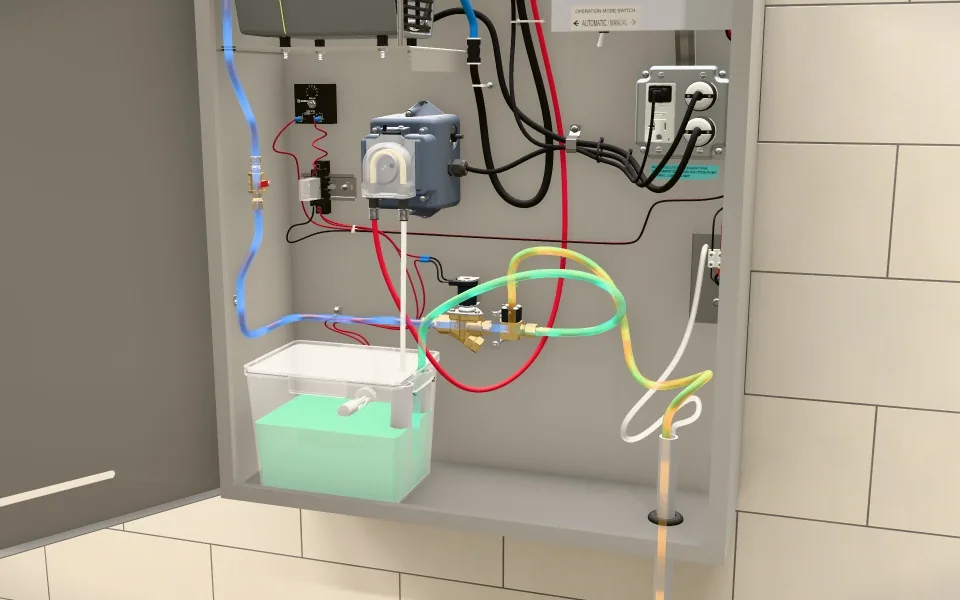
The cabinet mixes the solution
A wall-mounted stainless-steel cabinet, 24 by 32 by 8 inches deep, mixes Odor Neutralizer Solution with cold water. The container below it holds up to 10 gallons.
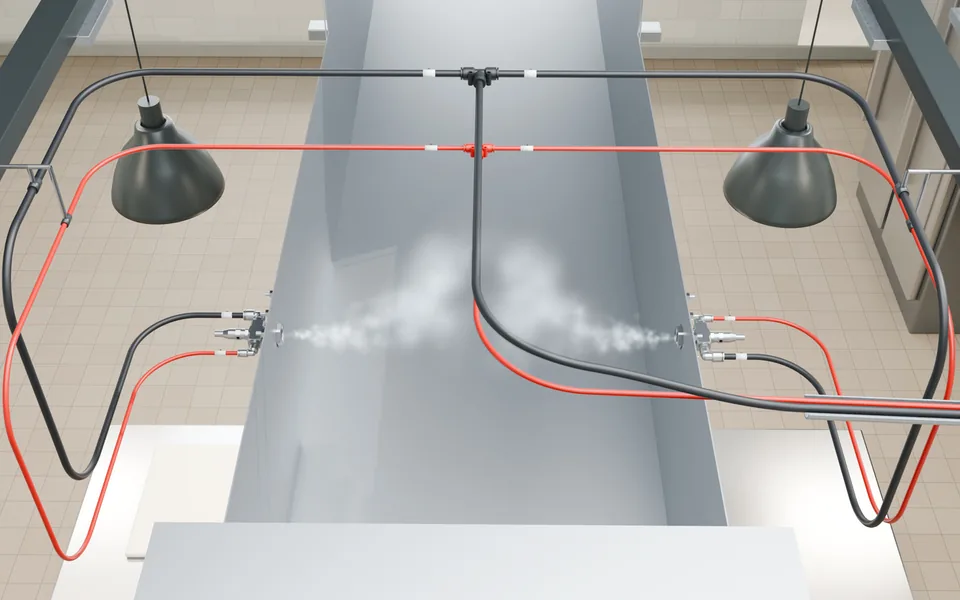
Two nozzles mist it into the duct
Air turns the solution into a fine mist. Nozzles mounted outside the exhaust duct direct it into the exhaust stream.
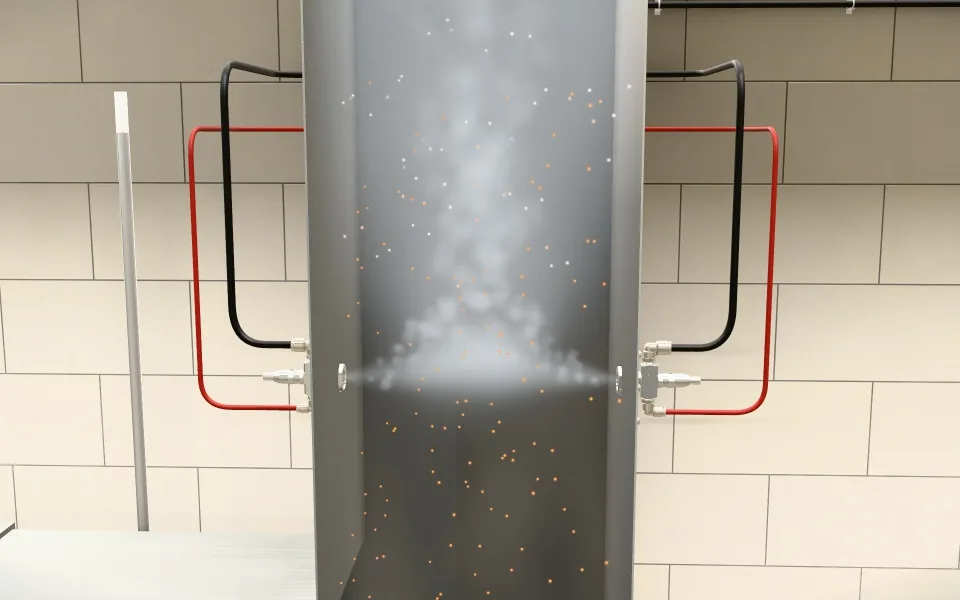
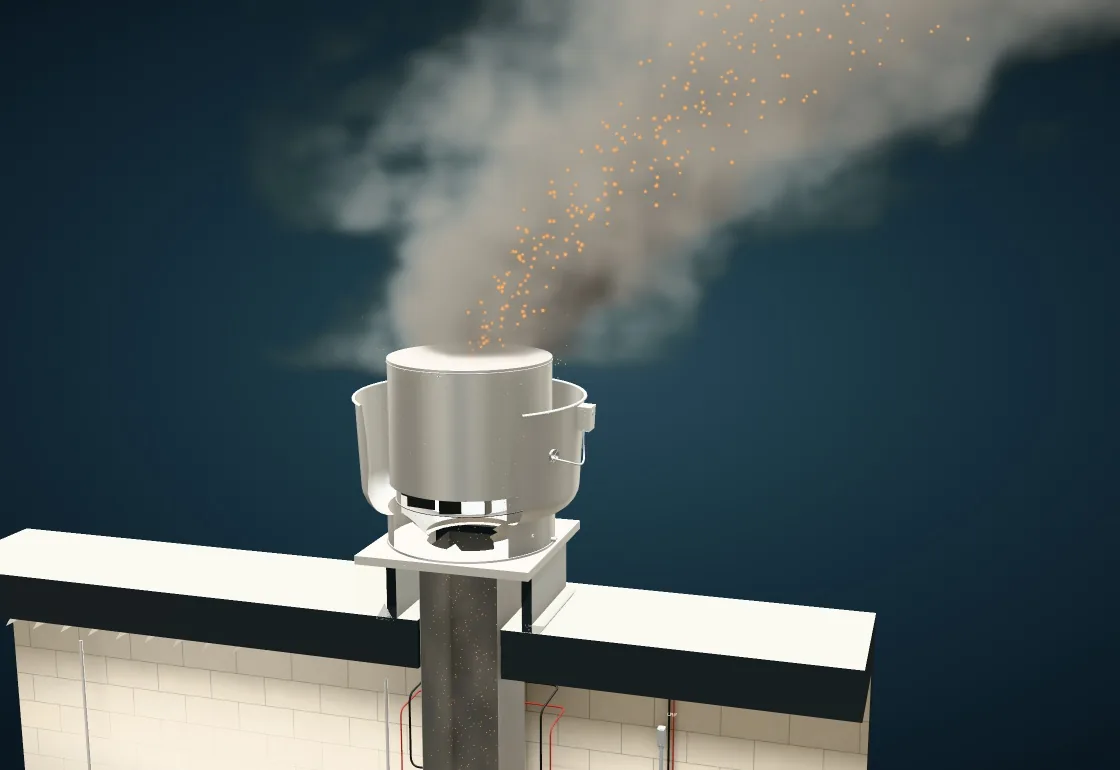
Odor is treated before the air leaves
The exhaust carries the mist toward the fan, neutralizing cooking odor in the exhaust stream before the air is discharged.
Explore every part of MOAS in 3D.
Watch the narrated tour, check whether MOAS fits your kitchen, or take the model apart yourself. It runs right in your browser.
- Show me how it worksA two-minute narrated overview. Just watch.
- Help me decide if it fitsSite needs, ownership and next steps.
- Let me explore on my ownEvery component, spec and 3D tool.
Installing or servicing a MOAS? Open the technician startup guide
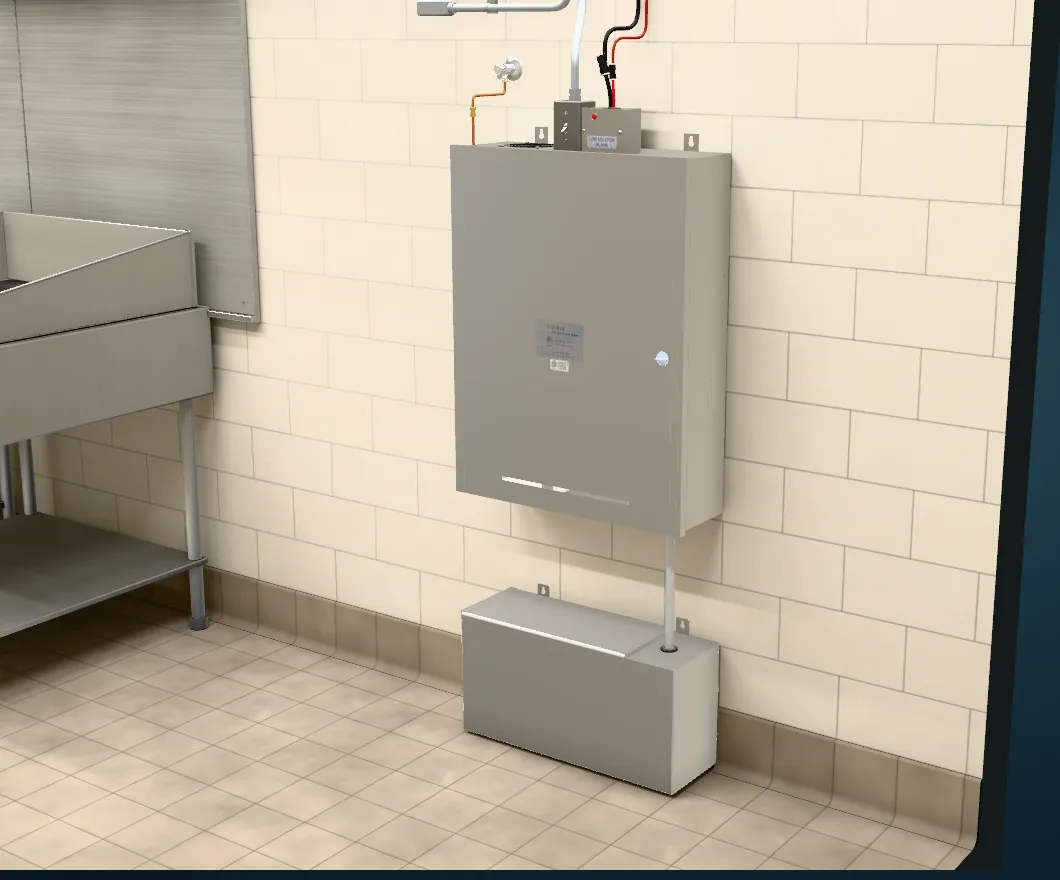
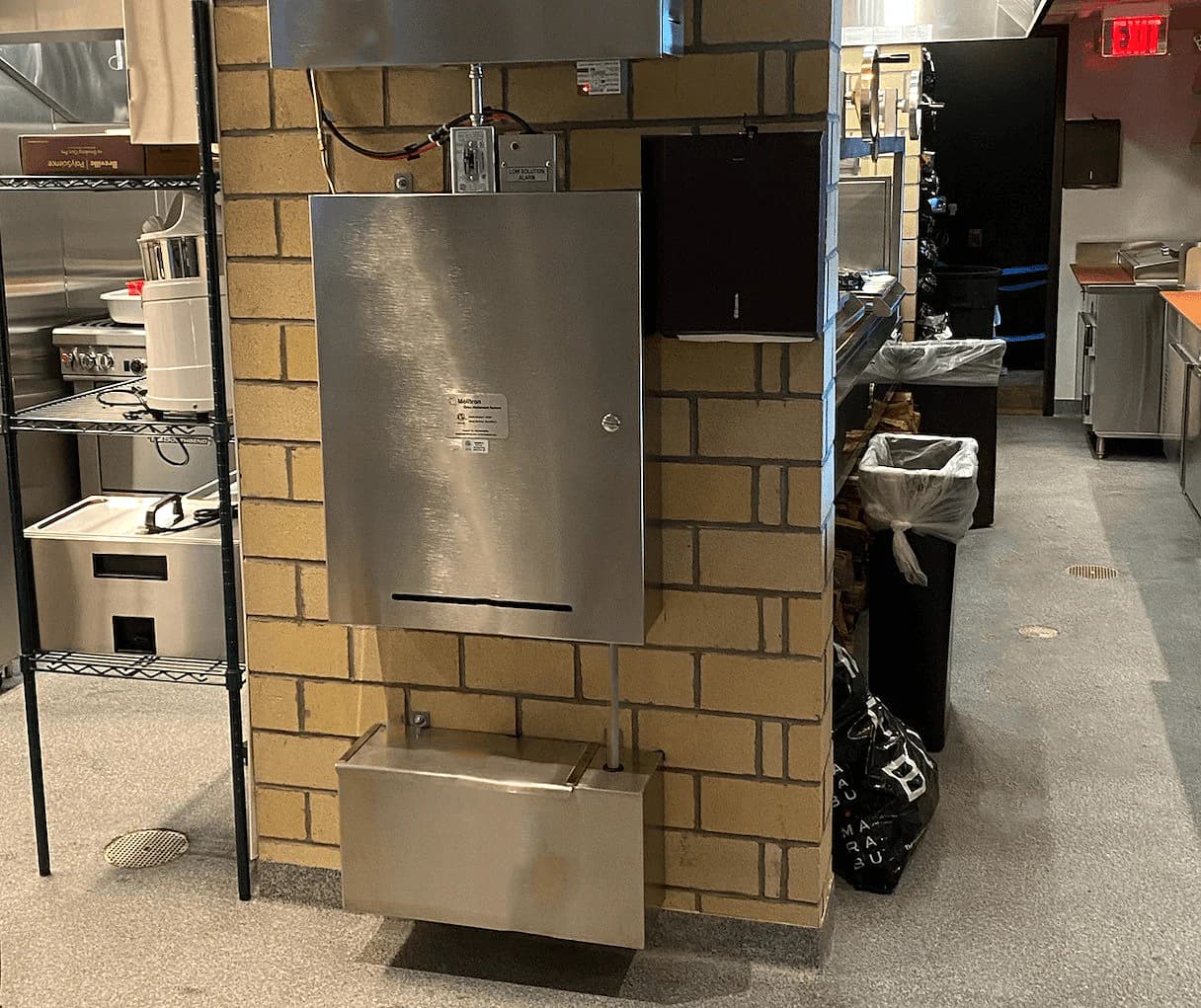
Compact, listed and easy to own.
- Stays outside the duct
Only the two nozzles meet the exhaust. The cabinet hangs on a wall in any convenient, ventilated spot near your kitchen staff.
- ETL Listed
For the United States and Canada, under Intertek Report 101453585DEN-002 (UL 197 and CSA C22.2 No. 109).
- Up to 6,000 CFM per system*
Each two-nozzle system covers exhaust up to 6,000 CFM. Configuration is set for your project.
- Works with your exhaust fan
An exhaust-fan interlock powers MOAS when the fan runs, and its SmartRelay can limit operation to cooking hours.
- Tells you when it’s low
When the solution runs low, a buzzer sounds and the red light on top of the cabinet comes on.
- Simple monthly care
Trained kitchen staff press each nozzle’s cleaning button, test the low-solution alarm and check the air filter once a month.
*Performance varies with cooking process, hood grease-removal performance, exhaust configuration, installation, dwell time and calibration. Results are not guaranteed. Capacity is subject to project-specific configuration; smoke reduction is not a particle-filtration rating.
EPFA dry filtration
Need smoke and grease filtration too?
The Enviro-Pak Filter Assembly (EPFA) is Molitron’s pollution control unit for commercial kitchen exhaust. Three dry filter stages remove smoke particulate and grease vapor, with no water, pumps or chemical dosing.
- UL Listed
- Models EPFA‑24 through EPFA‑144
- 1,800–10,800 CFM
- Eleven models
- MERV 14 final stage
- Or an optional D-Mark carbon stage
Some projects use both: EPFA filters the exhaust and MOAS treats the odor. Molitron reviews the combination with you.
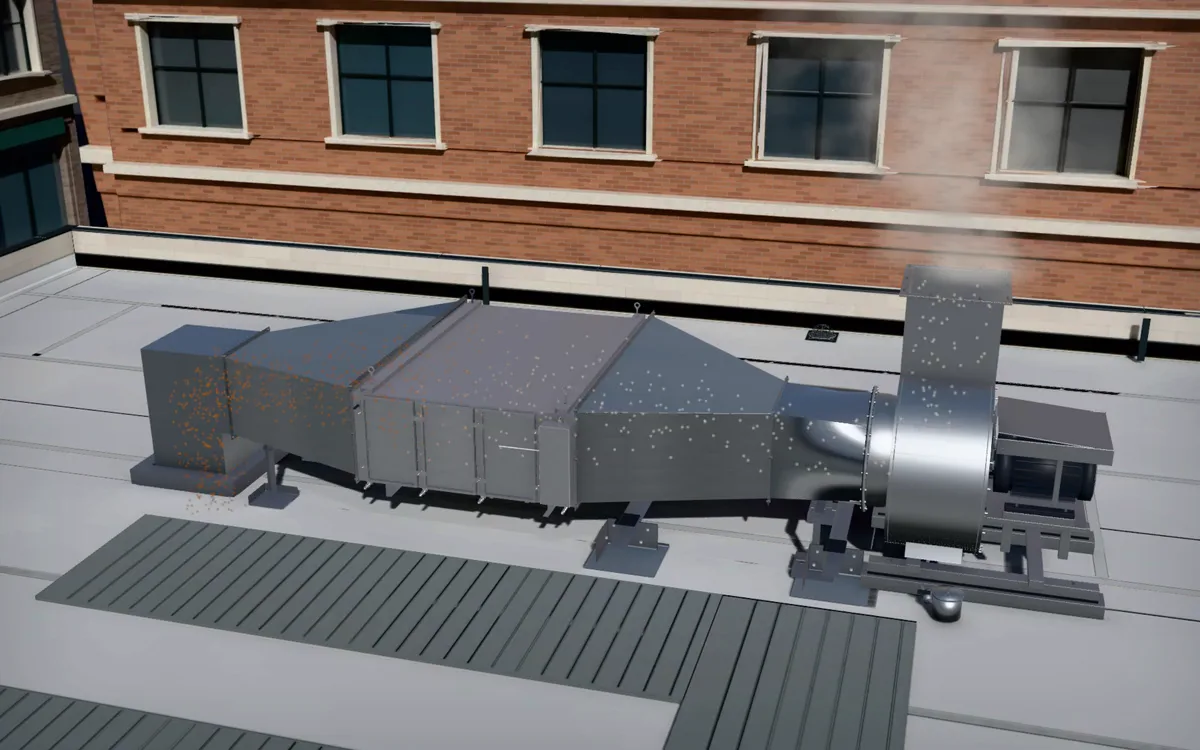
Where Molitron equipment works
Plan around the cooking process, the exhaust route and the people nearby.
- RestaurantsNew kitchens, remodels and sensitive discharge locations.View the application
- Airports & hospitalityFoodservice inside shared buildings.View the application
- Cannabis facilitiesStart with the odor source and exhaust conditions.View the application
- Industrial & specialtyReview the process before selecting equipment.View the application
What happens when you reach out
You work directly with the family business that builds the equipment.
- Tell us about your kitchen
Your location, cooking equipment, airflow if you know it, and where the exhaust discharges. Plans help, but you don’t need every detail to start.
- Hear back the same business day
And within one business day at most. You talk directly with the people who build the equipment.
- We configure it for your kitchen
Molitron configures each system for the kitchen it serves, and can review MOAS and EPFA together when you need both.
- Built in Colorado, supported direct
Fabricated by the family business that has made commercial kitchen pollution control and odor abatement equipment since 1986.
Questions owners ask
Planning details, upkeep and listings. For anything specific to your kitchen, ask us directly.
Where does the MOAS cabinet go?
In any convenient, ventilated spot near your kitchen staff, where they can reach the solution container and hear its alarm. It doesn’t need to sit beside the cooking line, and it stays outside the duct.
What does MOAS need from the building?
A dedicated 120 VAC, 20 A circuit run to the MOAS exhaust-fan interlock, and a ¼-inch cold-water supply (80 PSI maximum) through a shutoff valve. Routing is set for each project.
How much odor does MOAS remove?
Up to 95% odor reduction and up to 50% smoke reduction, depending on operating conditions. Results vary with the cooking process, hood grease-removal performance, exhaust configuration, installation, dwell time and calibration, and are not guaranteed.
What upkeep does it take?
Once a month, with MOAS and the exhaust fan running, trained staff press each nozzle’s cleaning button several times, test the low-solution alarm and check the air compressor’s intake filter. Refill the solution container when the buzzer sounds.
Is MOAS listed?
Yes. MOAS is ETL Listed for the United States and Canada under Intertek Report 101453585DEN-002, to UL 197 and CSA C22.2 No. 109. A listing is not a code approval for a particular project; your local authority makes that decision.
Does EPFA control odor too?
EPFA’s standard stages filter smoke particulate and grease vapor; standard filtration isn’t comprehensive odor removal. For odor, EPFA offers an optional D-Mark carbon final stage for a project-specific objective, or you can pair it with MOAS.
Who installs and services MOAS?
A trained HVAC technician must be present for installation and startup. Ongoing service and maintenance can be performed by a trained HVAC technician or trained kitchen staff.
How quickly will we hear back?
We reply the same business day, and within one business day at most.
Tell us about your kitchen.
Share your location, cooking equipment and exhaust layout. We reply the same business day, and within one business day at most.