
Dry filtration for kitchen exhaust
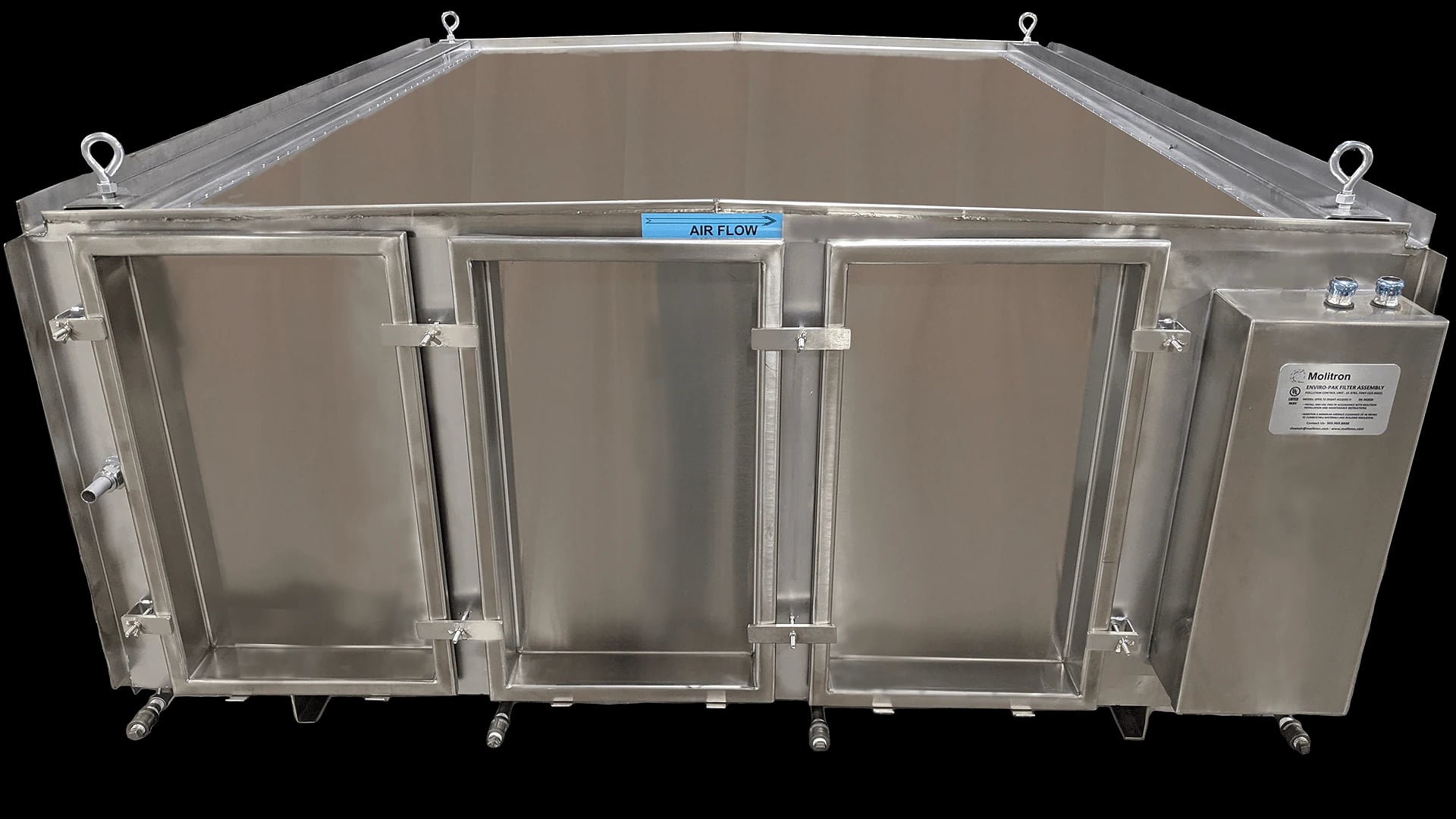
EPFAEnviro-Pak Filter Assembly
EPFA filters smoke particulate and grease vapor from commercial kitchen exhaust in three dry stages. Filtration needs no process water, circulation pumps or chemical dosing.
- Filtration
- 3 stagesDry, MERV 9 to MERV 14
- Capacity
- 1,800–10,800CFM across eleven models
- Construction
- Type 30418-gauge stainless steel
UL Listedunder File MH45752 · Models EPFA-24 through EPFA-144, investigated to the UL 8782 Outline of Investigation for Pollution Control Units for Commercial Cooking OperationsListing scope
Where EPFA fits
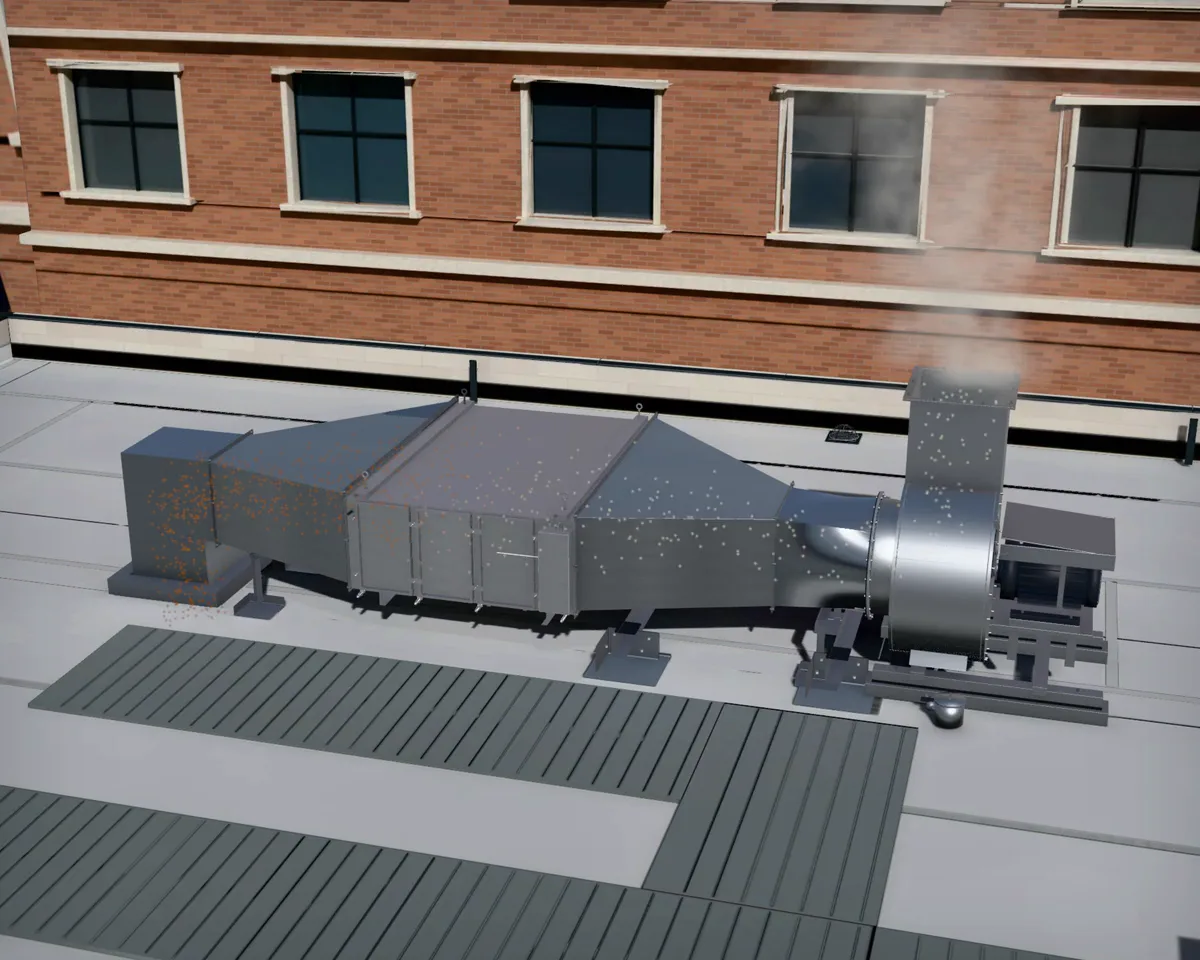
EPFA sits in the exhaust path between the kitchen hood and the fan. It is Molitron’s pollution control unit for commercial kitchen exhaust.
- A commercial-kitchen exhaust project needs dry filtration for smoke particulate and grease vapor
- The project team can coordinate duct, support, service access, drains, fire suppression, electrical monitoring, fan selection, and AHJ review
- Indoor or outdoor equipment placement is being evaluated within the exhaust path
- A project-specific optional D-Mark carbon stage is being evaluated for an odor-treatment objective
See every stage before it’s in your exhaust path.
Follow the guided tour, or open the interactive 3D model: check the fit for your project, or take it apart yourself. It runs in your browser.
Three dry filter stages
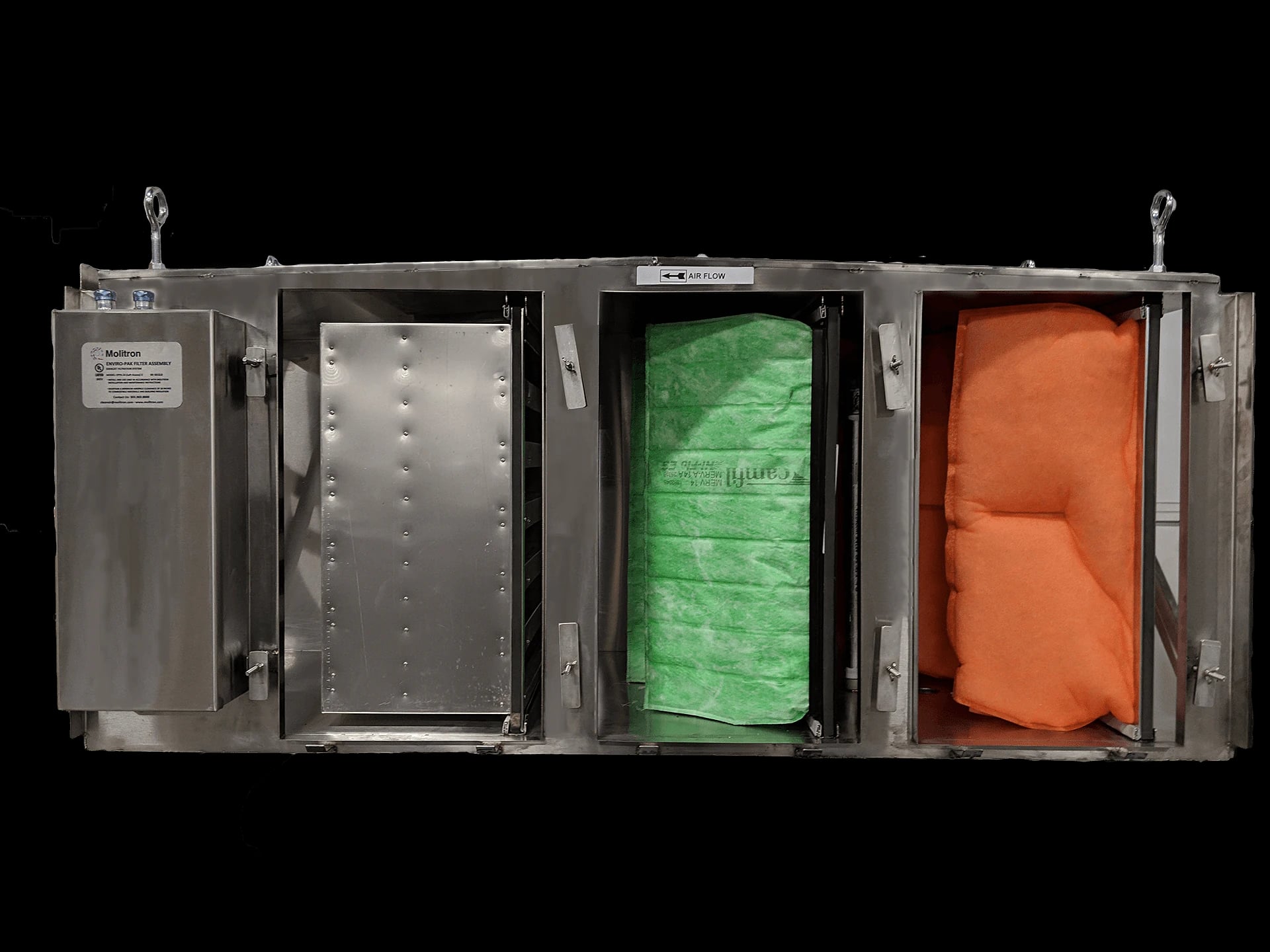
The exhaust passes through three stages of filter media behind removable, gasketed access doors.
F1 · Pre-filter
A MERV 9 pre-filter is the first stage in the exhaust path.
F2 · High-efficiency stage
A MERV 14 high-efficiency stage follows the pre-filter.
F3 · Final stage
Standard MERV 14 media, or an optional D-Mark carbon stage where a project has an odor-treatment objective.
EPFA’s standard stages address smoke particulate and grease vapor. The final stage may use MERV 14 media or optional D-Mark carbon; broader odor-control needs may call for MOAS odor abatement.
Plan the installation
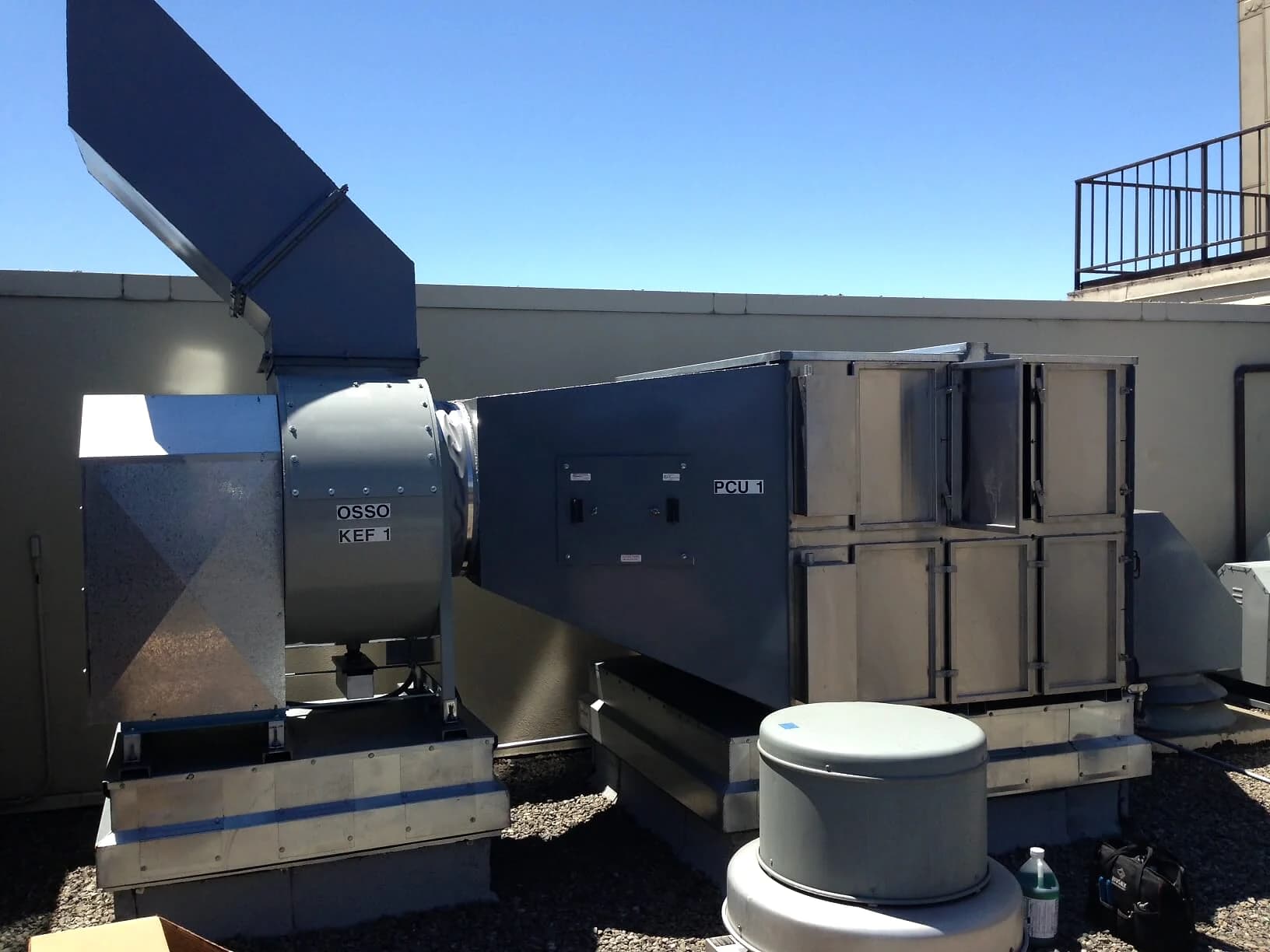
Coordinate duct, support, service access, drains, fire suppression, monitoring and fan selection with the project team and the authority having jurisdiction (AHJ).
- Placement
- Indoor or outdoor within the exhaust path, subject to project-specific coordination and current installation requirements.
- Access
- A 63-inch enclosure with three access doors; doors on both sides are optional.
- Clearances
- 30 in. on the service-access side. Other sides: 18 in. of air space to combustibles and building insulation, or zero clearance to noncombustible materials.
- Monitoring
- The system monitor panel is standard equipment. We recommend a visible location in the kitchen or GM’s office. A green light means the fan is on. A blinking red light means inspect the filters and replace them as needed.
- Fan selection
- Allow 1.54 in. w.g. initial EPFA resistance, plus hood, duct, and other system losses. Use a backward-inclined utility fan with adjustable RPM, listed for kitchen exhaust applications.
- Service
- Inspect and service the filters every four weeks, and respond promptly to a blinking red service light.
Eleven models
Model, configuration, fan selection, installation and AHJ acceptance remain project-specific.
| Model | CFM | Width | Approx. unit weight | Pre-filter qty. | High-efficiency qty. | Carbon added weight |
|---|---|---|---|---|---|---|
| EPFA-24 | 1,800 | 24 in. | 250 lb | 1 | 2 | 72 lb |
| EPFA-36 | 2,700 | 36 in. | 350 lb | 2 | 4 | 108 lb |
| EPFA-48 | 3,600 | 48 in. | 450 lb | 2 | 4 | 144 lb |
| EPFA-60 | 4,500 | 60 in. | 550 lb | 3 | 6 | 180 lb |
| EPFA-72 | 5,400 | 72 in. | 650 lb | 3 | 6 | 216 lb |
| EPFA-84 | 6,300 | 84 in. | 750 lb | 4 | 8 | 252 lb |
| EPFA-96 | 7,200 | 96 in. | 850 lb | 4 | 8 | 288 lb |
| EPFA-108 | 8,100 | 108 in. | 950 lb | 5 | 10 | 324 lb |
| EPFA-120 | 9,000 | 120 in. | 1,050 lb | 5 | 10 | 360 lb |
| EPFA-132 | 9,900 | 132 in. | 1,150 lb | 6 | 12 | 396 lb |
| EPFA-144 | 10,800 | 144 in. | 1,250 lb | 6 | 12 | 432 lb |
Unit weights are approximate. Carbon added weight is additional when the optional D-Mark carbon stage is selected. Filter quantities are total quantities rather than per-stage counts. Scroll sideways on small screens to see every column.
Specifications
Final selection depends on airflow, cooking equipment, discharge and project requirements.
| Listing | UL Listed under File MH45752 · Models EPFA-24 through EPFA-144 · Investigated to the UL 8782 Outline of Investigation for Pollution Control Units for Commercial Cooking Operations |
|---|---|
| Filtration | F1 MERV 9 pre-filter · F2 MERV 14 high-efficiency stage · F3 standard MERV 14 or optional D-Mark carbon final stage |
| Model range | EPFA-24 through EPFA-144 · 24–144 in. widths · 1,800–10,800 CFM |
| Construction | 18-gauge Type 304 stainless steel · fully welded, single-wall enclosure · removable gasketed access doors |
| Footprint and access | 63 in. enclosure length · width W follows the model suffix · three access doors · both-side access optional |
| Monitoring | The system monitor panel is standard equipment. We recommend a visible location in the kitchen or GM’s office. A green light means the fan is on. A blinking red light means inspect the filters and replace them as needed. |
| Placement | Indoor or outdoor within the exhaust path, subject to project-specific coordination and current installation requirements |
| Minimum clearances | 30 in. on the service-access side · Other sides: 18 in. air space to combustibles/building insulation, or zero clearance to noncombustible materials |
| Fan-selection input | Allow 1.54 in. w.g. initial EPFA resistance, plus hood, duct, and other system losses. Use a backward-inclined utility fan with adjustable RPM, listed for kitchen exhaust applications. |
| Service | Inspect and service the filters every four weeks, and respond promptly to a blinking red service light. |
Documents
Current planning and service references for the project team.
- Product brochureEPFA Product & Planning Brochure (Rev A)Filter stages, model specifications, service clearances and monitoring requirements for EPFA planning. Not for construction.Download
- Technical manualEPFA Legacy Operation & Maintenance Manual (D-Mark update)The 10-page legacy reference for installation, monitoring, filter service, wiring diagrams, warranty and equipment checkoff, with D-Mark carbon filters.Download
Equipment and installations
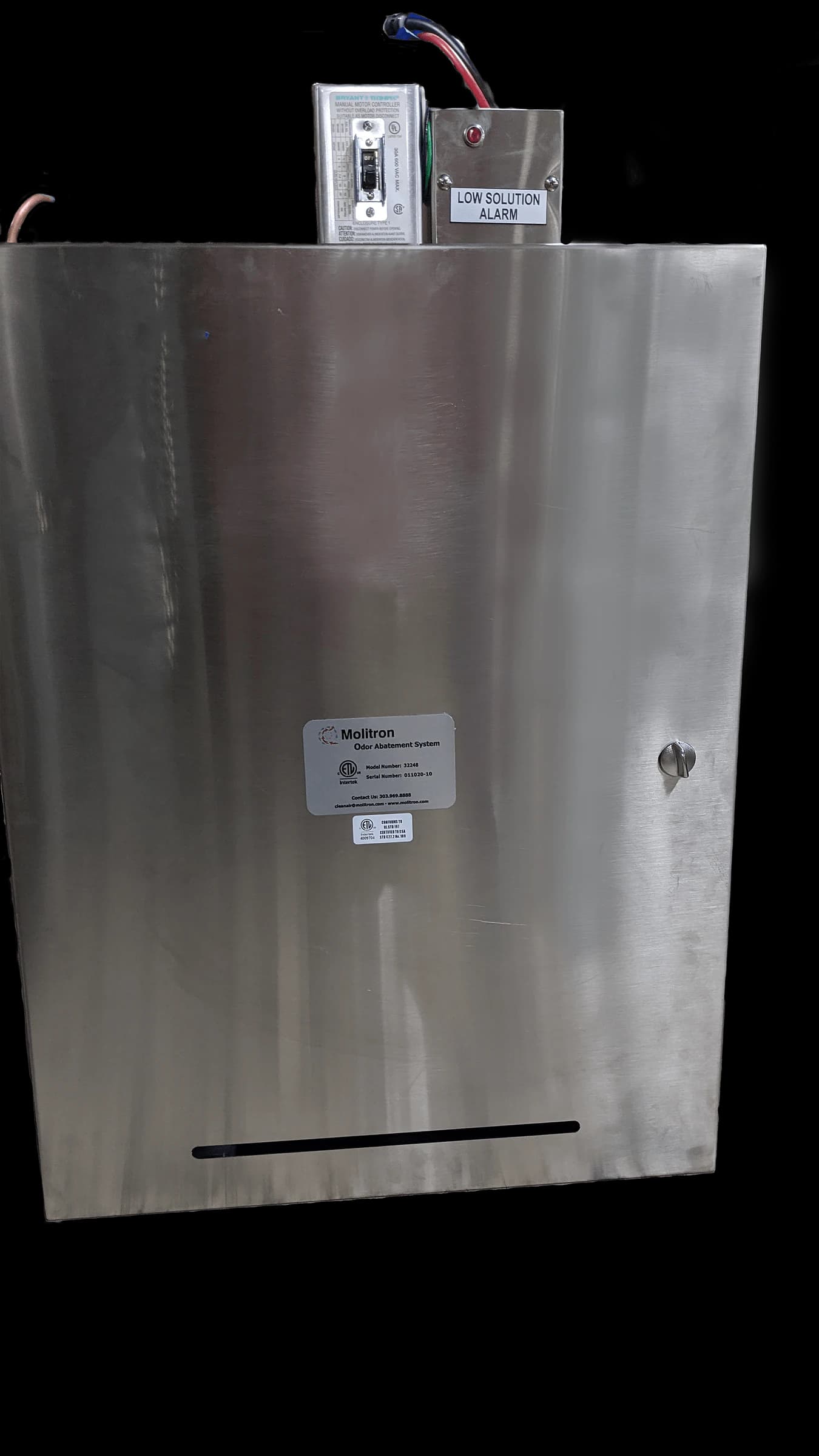
Photographs of EPFA filter assemblies and installed systems. Select a photo to enlarge it.
Where EPFA is installed
Selected installation history across restaurants, airports, hotels and other commercial kitchens.
- UNO K Street, DC
- Apron Kitchen, Denver International Airport
- Sheraton Hotel, CO
Names identify installation history and do not imply endorsement, sponsorship, or a current commercial relationship.
See all installation history











MOAS odor abatement
Need odor treatment too?
MOAS treats cooking odor inside the exhaust duct with a fine mist of Odor Neutralizer Solution from two remote nozzles. Some projects use both: EPFA filters the exhaust and MOAS treats the odor.
Plan a project with EPFA.
Share your location, cooking equipment and exhaust layout. We reply the same business day, and within one business day at most.