
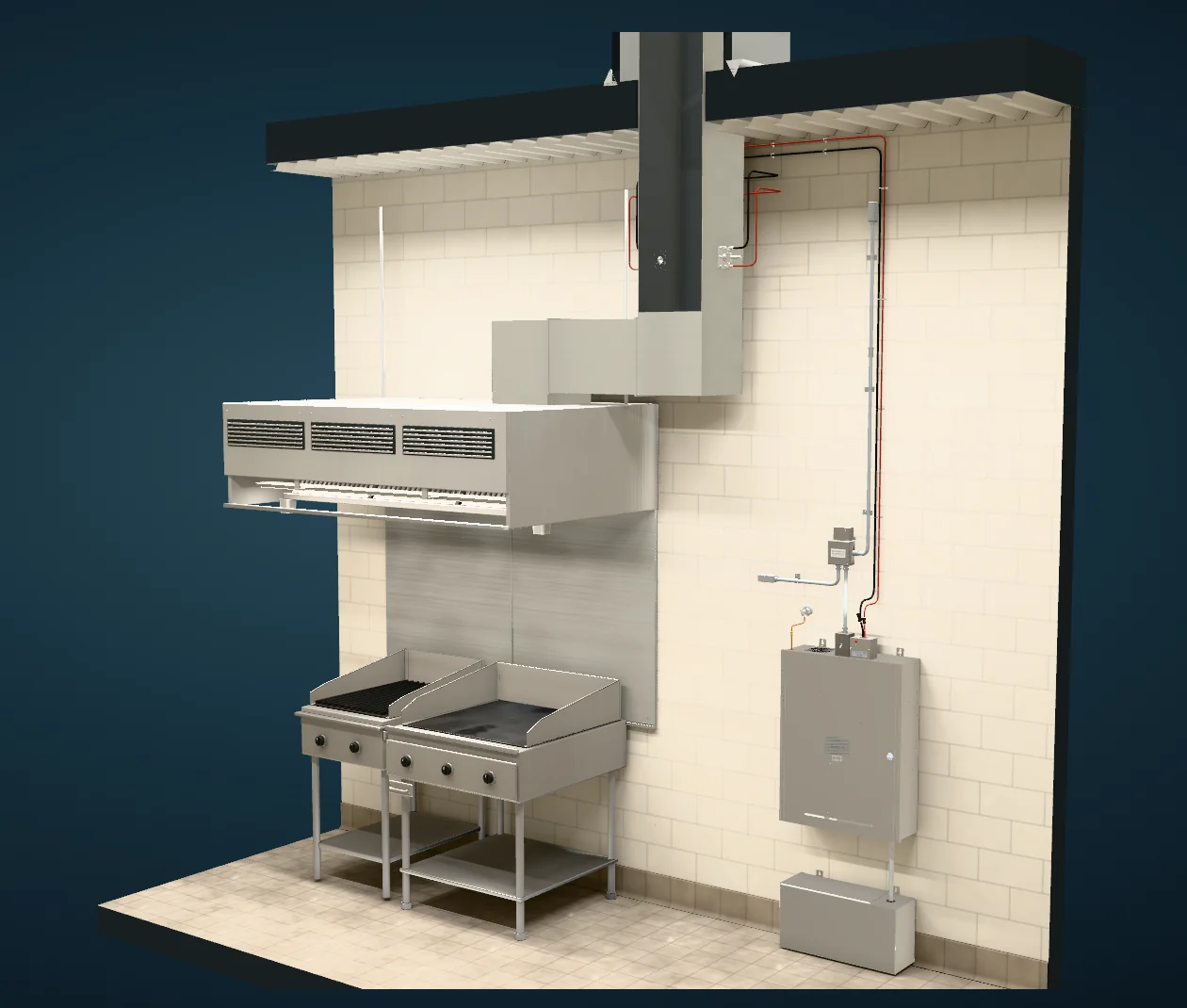
How MOAS treats the exhaust
MOAS uses chemical neutralization to change odor compounds rather than covering them with a perfume or masking fragrance. The odor-treatment step uses no disposable filter media, so it creates no spent-filter waste byproducts. Neutralizing solution reaches the exhaust through the misting nozzles.
The Molitron Odor Abatement System delivers solution and compressed air to misting nozzles positioned in the exhaust path. An exhaust-fan interlock coordinates operation with the fan. Cabinet placement and nozzle placement are separate decisions, connected by the routed air and solution tubing.
A two-nozzle system serves up to 6,000 CFM; final configuration and calibration are project-specific. Cooking process, hood grease-removal performance, airflow, dwell time and discharge conditions all affect results. Review the qualified performance information on the current MOAS product page.
Space and utilities for the cabinet
The stainless-steel cabinet measures 24 inches wide, 32 inches high and 8 inches deep, with an approximate weight of 100 pounds. Plan an indoor wall location with access for service and the standard external solution container, which holds up to 10 gallons.
Current project requirements include a dedicated 120 VAC, 20 A circuit for MOAS and a 1/4-inch cold-water supply, with 80 PSI maximum pressure. The remote nozzles connect through 1/4-inch OD liquid tubing and 3/8-inch OD air tubing. Coordinate the complete route, nozzle locations and exhaust-fan interlock using the current installation planning guide.
Controls, mixing and the low-solution alarm
Inside the cabinet, the air compressor supplies the nozzles, the pump delivers diluted solution, and the SmartRelay provides scheduled cooking periods. The water solenoid valve and injector supply the mixing container. Contact Molitron for guidance on dilution adjustment and calibration for the installed equipment; the external fan interlock must permit operation before the nozzles run.
The low-solution alarm uses a red light and an internal cabinet buzzer to signal that the external supply needs attention when control power is available. Locate the cabinet where staff can hear the buzzer and reach the container for refilling. Ask Molitron about alarm checks, refill controls and qualified adjustment for your system.
When the project also needs filtration
Odor treatment and particulate filtration have different jobs. For commercial kitchen exhaust with smoke particulate and grease vapor concerns, PCU provides three-stage dry filtration. MOAS can operate independently or alongside PCU when the project calls for both functions.
Start the review with the menu, cooking equipment, airflow and discharge location. Note neighboring occupied areas and existing filtration so Molitron can discuss the treatment objective and equipment fit.