
Start with the cooking equipment and hood
Provide the menu, appliance list, hood arrangement and airflow when discussing a new kitchen or remodel. Changes in cooking load can change the exhaust-treatment objective. Include details of the existing hood grease-removal equipment and any downstream filtration.
Molitron’s EPFA is an in-line filtration assembly between the kitchen hood and discharge, positioned before the fan in the documented arrangement. It is not a replacement filter insert for the hood. Its documented application is commercial kitchen exhaust, with equipment selection based on the project conditions.
Understand the downstream filter stages
EPFA uses a MERV 9 pre-filter followed by a MERV 14 high-efficiency stage and a final MERV 14 or optional D-Mark carbon stage. The dry filtration stages address smoke particulate and grease vapor; optional D-Mark carbon is evaluated for the project’s odor-treatment objective.
The 18-gauge Type 304 stainless-steel enclosure has removable doors for filter access. Plan the service side and filter-removal space before fixing the duct layout. Filter monitoring and maintenance access are part of the operating plan, along with airflow and fan selection.
EPFA is UL Listed under File MH45752. Models EPFA-24 through EPFA-144 were investigated to the UL 8782 Outline of Investigation for Pollution Control Units for Commercial Cooking Operations. This equipment listing does not establish project approval; site requirements still need review.
When restaurant odor needs additional treatment
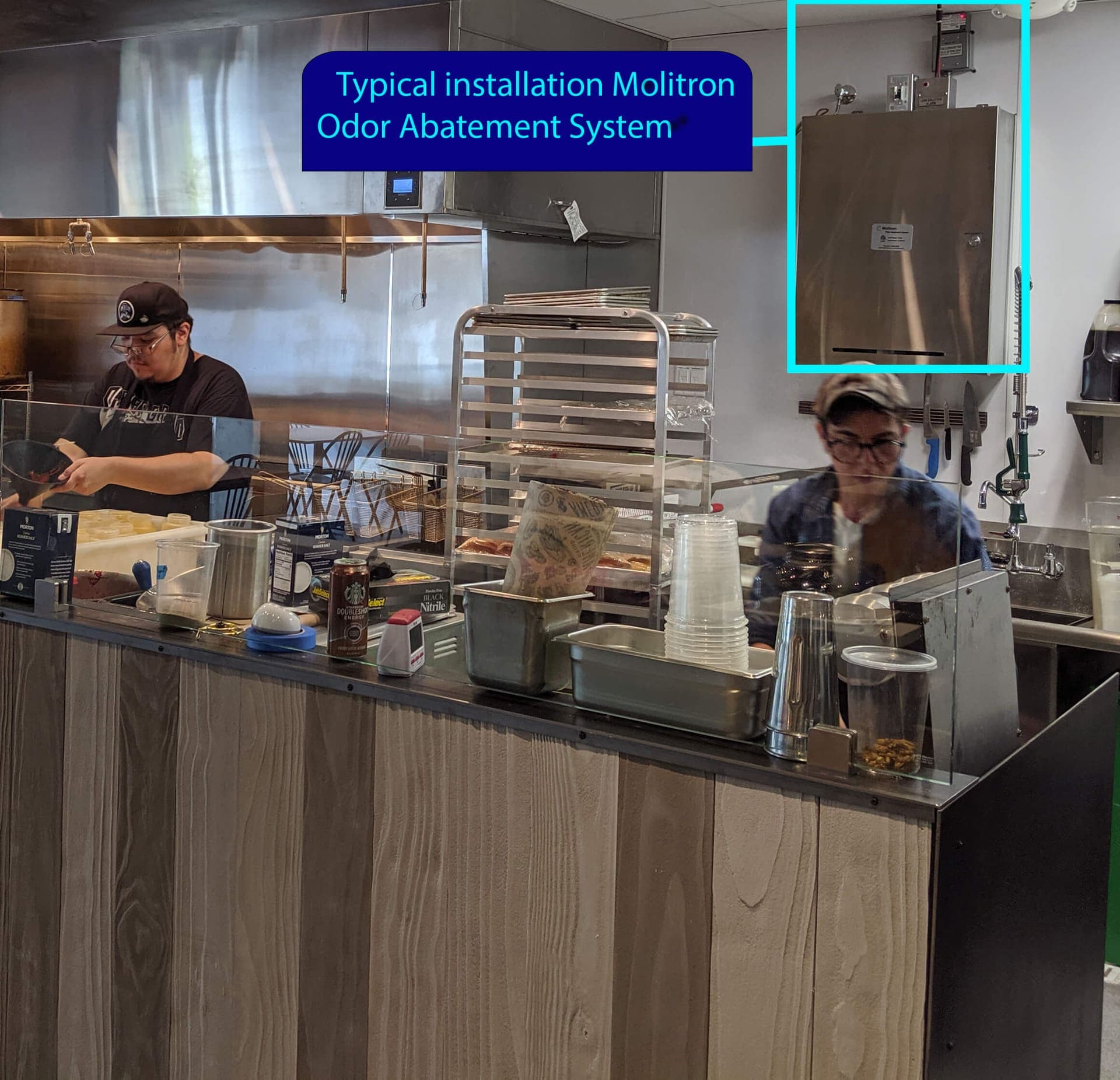
MOAS treats cooking odor by introducing atomized Odor Neutralizer Solution through nozzles in the exhaust airstream. The cabinet mounts outside the duct and can operate alongside EPFA when the application needs both filtration and odor treatment.
Describe the discharge location and neighboring spaces as well as the kitchen. A review of the complete exhaust path helps the project team coordinate the hood, filters, fan, utilities and access. Suitability and results remain specific to the cooking process and installation.