

MOAS Product Brochure
Version 2.0 · October 2026
Molitron Odor Abatement System (MOAS)
Cooking odor, treated inside the exhaust.
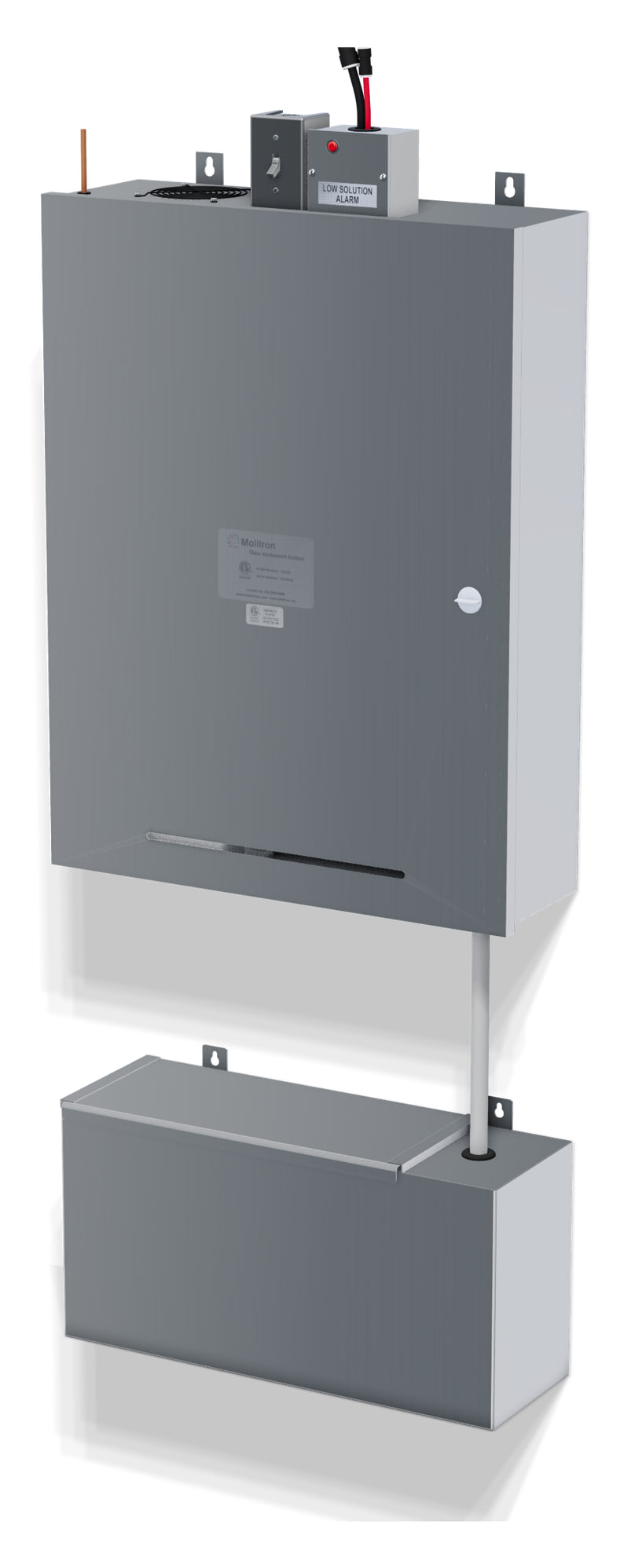
Kitchen exhaust can carry cooking odor to neighbors, guests and the street. MOAS treats that odor inside your exhaust duct, before the air is discharged. MOAS mixes Molitron Odor Neutralizer Solution with your building’s cold water and sends it, with compressed air, to two nozzles that mist it into your exhaust duct.
- Up to95%*odor reduction
- Up to50%*smoke reduction
- Up to6,000 CFM*per two-nozzle system
- Up to10 galsolution container
- Cabinet24×32×8 inW × H × D
- Power120 VAC20 A dedicated circuit
- ListingETL ListedUnited States and Canada
*Performance varies with cooking process, hood grease-removal performance, exhaust configuration, installation, dwell time and calibration. Results are not guaranteed. Capacity is subject to project-specific configuration; smoke reduction is not a particle-filtration rating.
 Molitron · MOAS Product BrochureHow it works · Runs itself
- Cold water
- Odor Neutralizer Solution
- Diluted solution
- Compressed air
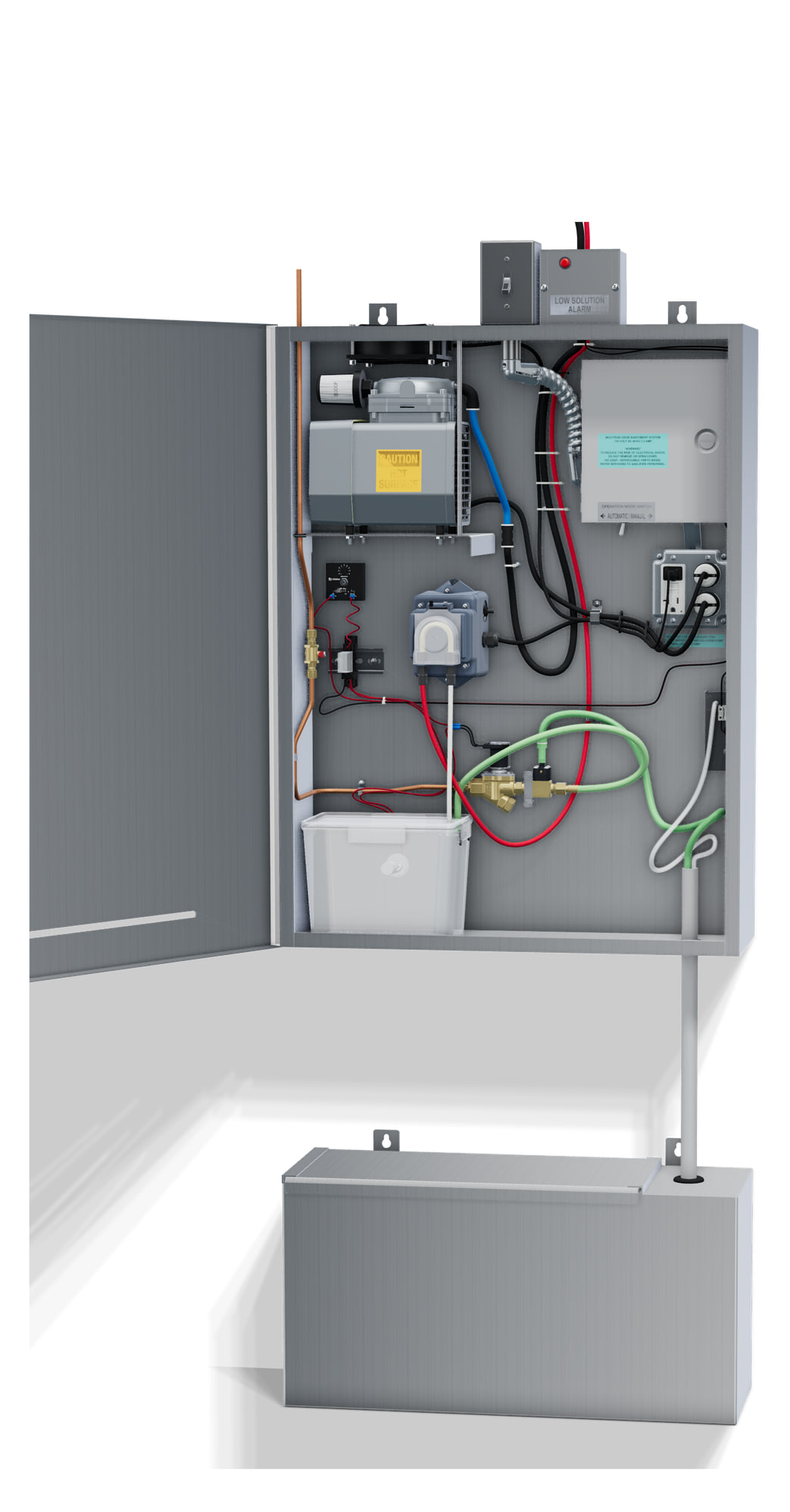
Rendered from the model in Molitron’s 3D viewer, door open. Paths are illustrative.
01
From cold water to a fine mist.
Everything that mixes and meters the solution is in one stainless steel cabinet.
- 1
Cold water comes in
A 1/4-inch copper line brings your building’s cold water into the cabinet through its own shutoff valve.
- 2
Odor-neutralizing solution joins the water
As cold water passes through the brass injector, it draws odor-neutralizing solution from the container below.
- 3
Mixed solution inside the cabinet
Water and odor-neutralizing solution flow into a small mixing container. A float switch and delay timer control when it refills.
- 4
Air turns the solution into a fine mist
The compressor sends air through the black line. At each nozzle, air and solution combine to form a fine mist.
- 5
Delivered to your grease duct
A metering pump sends diluted solution through the red line to two nozzles in your grease duct. Compressed air travels alongside it through the black line.
- 6
Odors neutralized in the exhaust stream
Two opposing nozzles deliver an odor-neutralizing mist inside the duct. The exhaust carries the mist toward the fan, giving it time to act on cooking odors.
02
Runs itself, and tells you when it’s low.
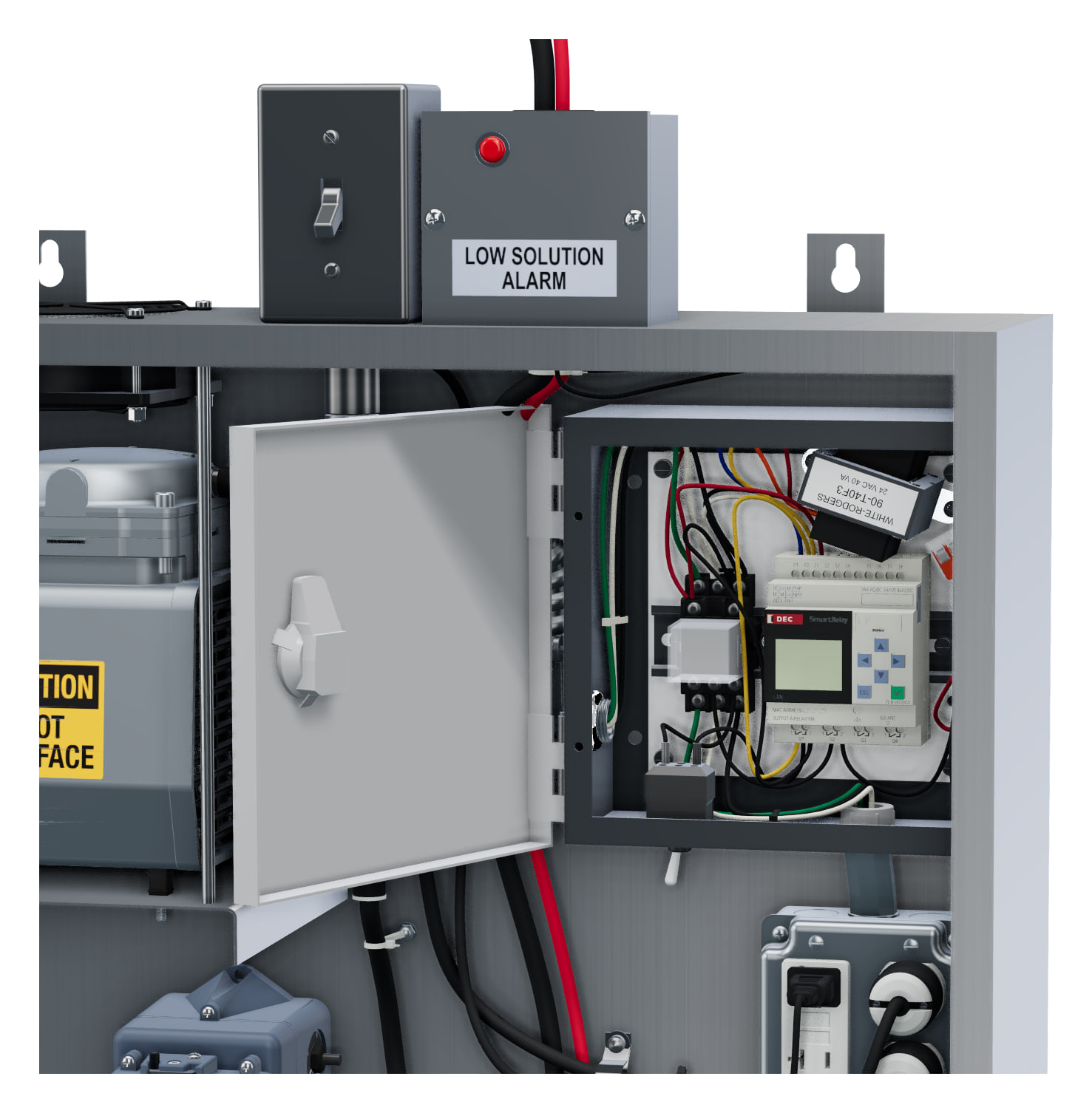
- Runs on your schedule. Cooking periods are set in the IDEC SmartRelay so MOAS runs during those times. The exhaust-fan interlock prevents operation whenever the fan is off.
- Warns before it runs dry. The low-solution alarm monitors the container through a pressure-sensing tube. When solution runs low, the cabinet buzzer sounds and the red light on top illuminates until the container is refilled.
 Molitron · MOAS Product BrochureInstallation
03
A cabinet on the wall, two nozzles on the duct.
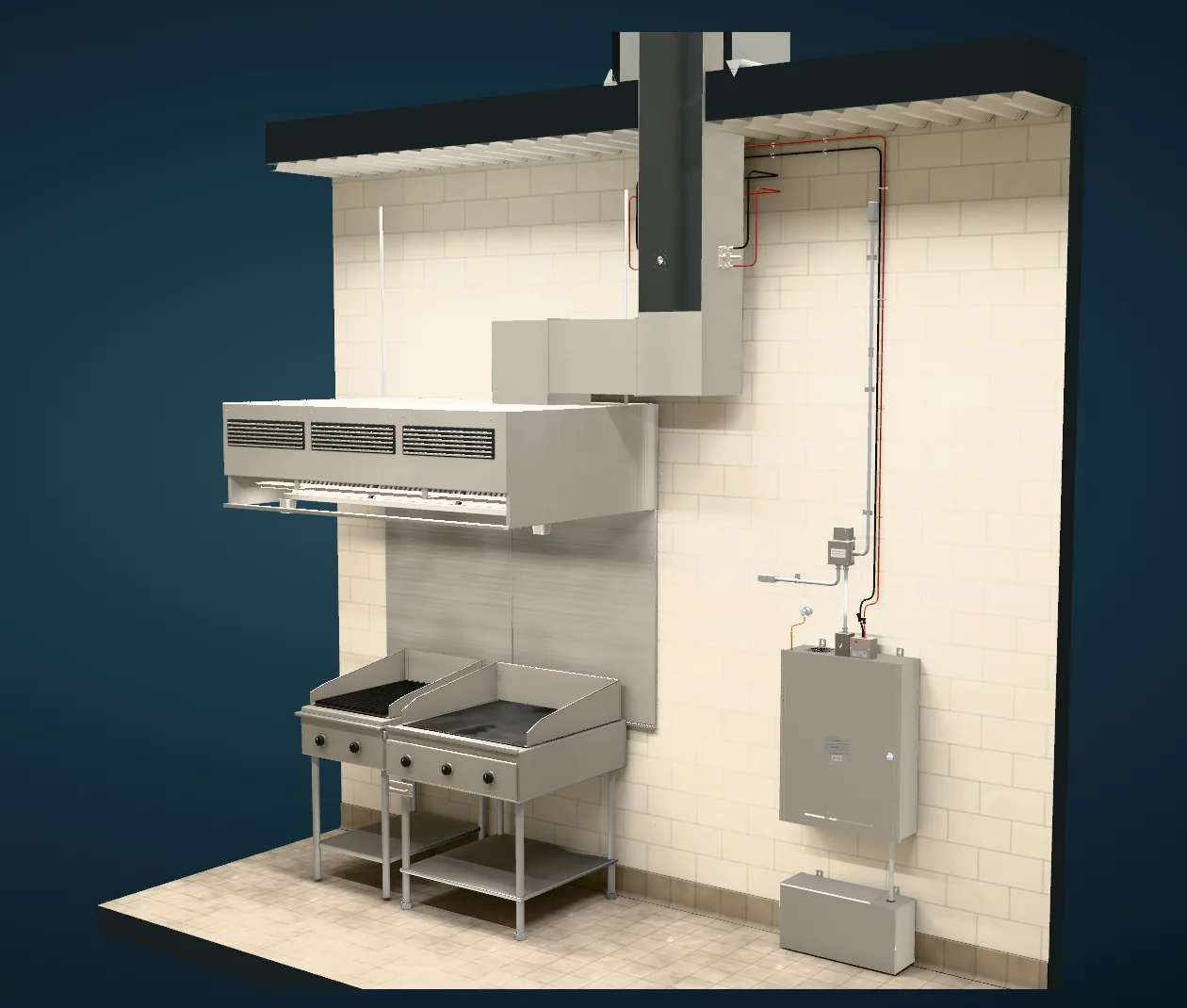
The cabinet and its container go on a wall; only the two misting nozzles go in your duct.
- Location
- Any convenient, ventilated indoor spot near your kitchen staff, where they can reach the container and hear the alarm. Not an unventilated enclosed closet, and not necessarily beside the cooking line.
- Nozzles
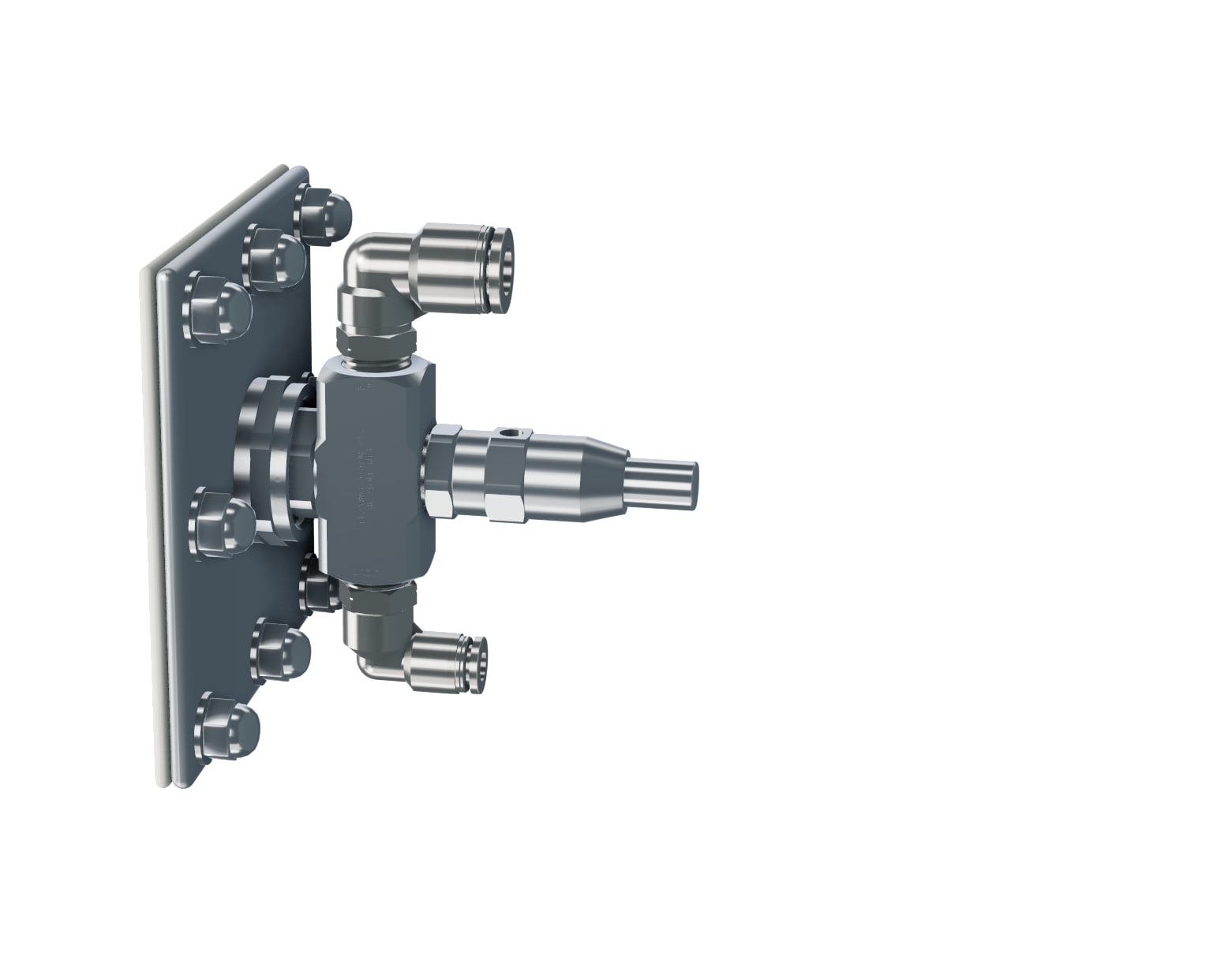
- Two atomizing nozzles on opposite sides of the exhaust duct, fed by separate air and solution tees, with their rear cleaning buttons within reach.
- Duct run
- At least 10 ft of duct between the nozzles and the exhaust discharge, so the mist has time to act.
- Lines
- Black 3/8 in air and red 1/4 in solution tubing, up to 100 ft per cabinet-to-tee-to-nozzle path. Corresponding tee branches should be relatively close in length.
Front

Side
04
Connected to your building.
- Cold water
- A 1/4 in copper supply, 80 PSI maximum, through a building shutoff valve. MOAS also has its own shutoff inside the cabinet.
- Dedicated circuit
- 120 VAC, 20 A, dedicated to MOAS, run in conduit from your electrical panel to the MOAS exhaust-fan interlock.
- Exhaust-fan interlock
- The exhaust fan has its own separate connection to the interlock. When the fan is on, the interlock lets power through to the cabinet; when it is off, MOAS cannot run. MOAS does not power the fan.
- Air and solution lines
- From the cabinet top to the two nozzles in the duct. One inch conduit is recommended for the two lines.
05
Will MOAS fit my kitchen?
Tick what your site already has. Anything left is part of planning, and we can help.
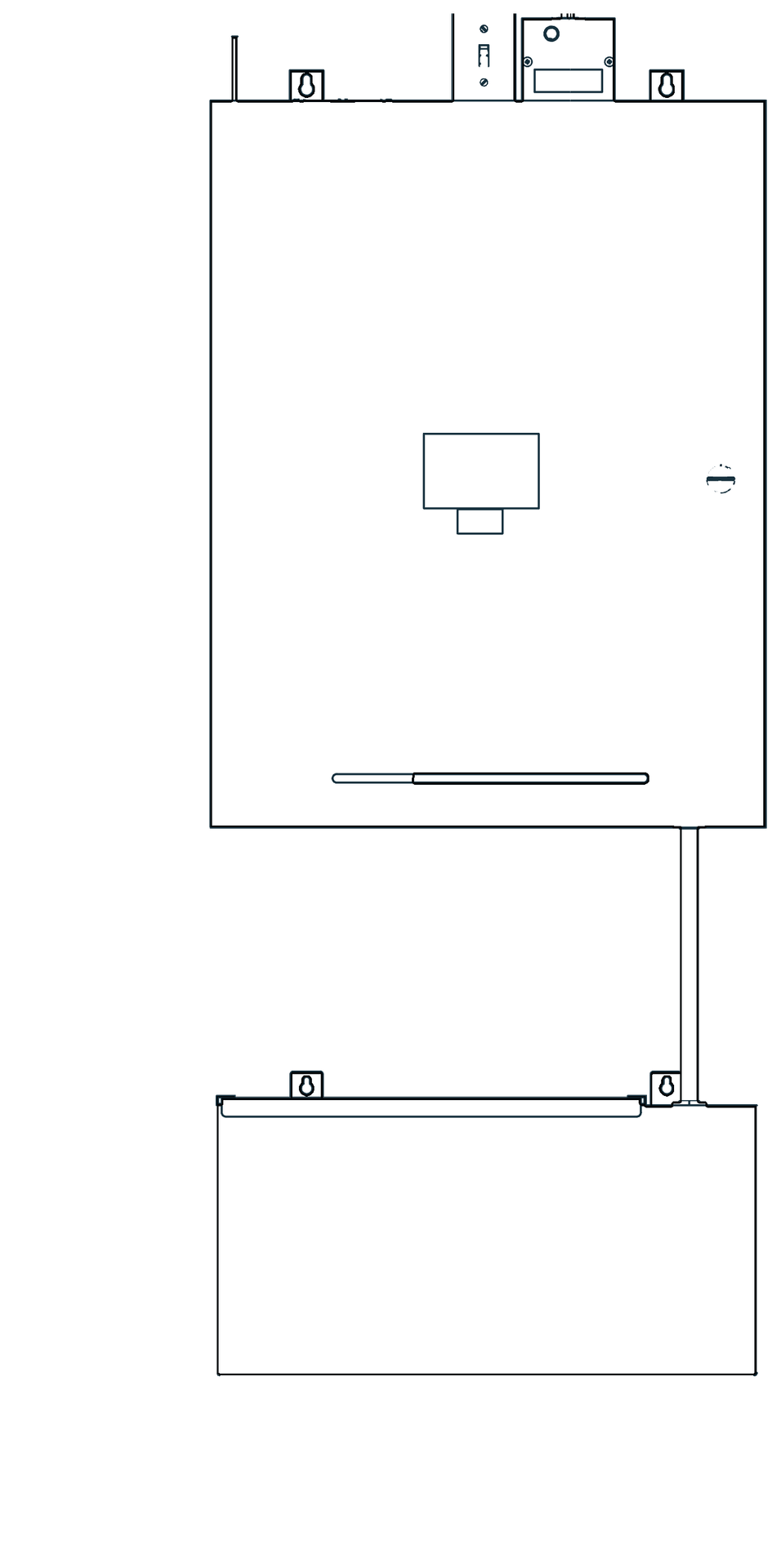
- Wall space for the cabinet and container24 in wide, with the 32 in cabinet above the 12 in container, in a ventilated spot your staff can reach.
- A cold water supplyA 1/4 in copper line at 80 PSI or less.
- A dedicated 120 VAC, 20 A circuitFor MOAS alone, run to the exhaust-fan interlock.
- An exhaust fan to interlock withMOAS runs only while the fan is on. It does not power the fan.
- A line route of 100 ft or less to the ductPer cabinet-to-tee-to-nozzle path, with at least 10 ft of duct after the nozzles.
Molitron · MOAS Product BrochureEasy to own · Specifications06
Easy to own.
- Maintain the solution level. The container holds up to 10 gallons of odor-neutralizing solution. Slide the lid forward to check the level or refill it; the tubes stay in place. Refill immediately when the alarm sounds, at approximately two gallons remaining.
- It tells you when it’s low. When solution runs low, a buzzer inside the cabinet sounds and the red light on top illuminates. Place the cabinet where staff can hear the alarm during working hours.
- Keep the nozzles clear. Once a month, while the MOAS and the exhaust fan are running, press and release the rear cleaning button on each nozzle several times. This helps keep grease buildup from obstructing the nozzle tips, so they can continue delivering mist into the exhaust stream.
- Service made easy. For maintenance or repair, authorized technicians or trained staff can open the cabinet door and access the system’s components directly.
07
Specifications.
| Odor reduction | Up to 95%* |
|---|---|
| Smoke reduction | Up to 50%* |
| Capacity | Up to 6,000 CFM per two-nozzle system* |
| Method | Atomizes Odor Neutralizer Solution through two remote misting nozzles that spray into the exhaust duct |
| Size | 24 W × 32 H × 8 D inBody dimensions; projections and service clearances additional. |
|---|---|
| Construction | 18-gauge stainless steel |
| Weight | Approximately 100 lb |
| Mounting | Wall-mounted, 16 in centersFinal support and anchorage are project-specific. |
| Location | Ventilated indoor location with service accessNot an unventilated enclosed closet. |
| Capacity | Up to 10 gallons of Odor Neutralizer Solution |
|---|---|
| Size | 24 W × 12 H × 8 D in |
| Construction | 16-gauge stainless steel |
| Weight | Approximately 20 lb empty, 100 lb full |
| Low-solution alarm | Below 2 galAn operating reference, not a precision guarantee. The buzzer is inside the cabinet. |
| ETL Listed | United States and CanadaIntertek Report 101453585DEN-002 identifies UL 197 and CSA C22.2 No. 109 as the applicable standards. Listing does not establish approval of a field installation. |
|---|---|
| Equipment type | Commercial, indoor-use, permanently connected |
| Electrical | 120 VAC, 20 A dedicated circuit for MOAS |
|---|---|
| Listed rating | 120 V, 3.5 A, 60 HzThe listed equipment rating, a separate value from the dedicated-circuit requirement. |
| Cold water | 1/4 in supply, 80 PSI maximumA building isolation valve is recommended; MOAS also has an internal shutoff. |
| Exhaust-fan interlock | Prevents MOAS operation when the exhaust fan is off |
| Nozzles | Two atomizing nozzles in the exhaust duct, fed by separate air and solution tees |
|---|---|
| Air line | Black, 3/8 in OD tubing |
| Solution line | Red, 1/4 in OD tubing |
| Line length | Up to 100 ft per cabinet-to-tee-to-nozzle pathConfirm routing with Molitron. Corresponding tee branches should be relatively close in length. |
| Conduit | 1 in recommended for the two linesNot a universal code requirement. |
| Refill delay | Adjustable from 30 seconds to 8 minutes; set to 8 minutes |
|---|---|
| Schedule | Runs during your cooking hours, set on the IDEC SmartRelay |
| Nozzle cleaning | Once a month, cycle the rear cleaning buttons several times, with MOAS and the exhaust fan running |
| Service | By authorized personnel or trained kitchen staffFor maintenance or repair, authorized technicians or trained staff can open the cabinet door and access the system’s components directly. |
*Performance varies with cooking process, hood grease-removal performance, exhaust configuration, installation, dwell time and calibration. Results are not guaranteed. Capacity is subject to project-specific configuration; smoke reduction is not a particle-filtration rating.