
Odor abatement for commercial kitchens
MOASMolitron Odor Abatement System
MOAS treats cooking odor inside your kitchen exhaust. Two remote nozzles mist Odor Neutralizer Solution into the duct; a wall-mounted stainless-steel cabinet mixes and meters it. It runs on its own or alongside EPFA filtration.
- Up to
- 95%*odor reduction
- Up to
- 50%*smoke reduction
- Up to
- 6,000 CFM*per two-nozzle system
*Performance varies with cooking process, hood grease-removal performance, exhaust configuration, installation, dwell time and calibration. Results are not guaranteed. Capacity is subject to project-specific configuration; smoke reduction is not a particle-filtration rating.
ETL Listedfor the U.S. and Canada · Intertek Report 101453585DEN-002 · UL 197 · CSA C22.2 No. 109Listing scope
Where MOAS fits
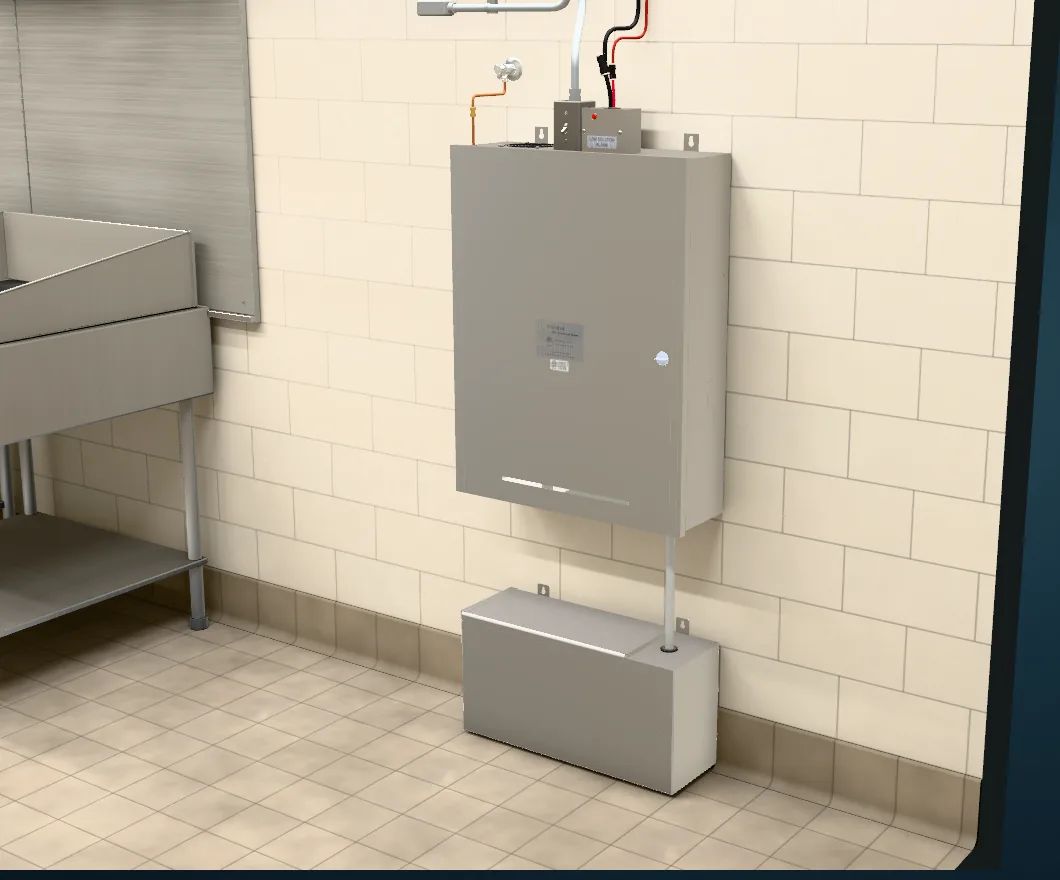
An odor scrubber for commercial kitchen exhaust where cooking odor affects neighbors or occupied spaces. The cabinet stays outside the duct, in any convenient, ventilated spot near your kitchen staff.
- Cooking odors affect neighboring properties or facility operations
- Sidewall, ground-level, or other sensitive discharge locations
- You need odor abatement with or without full PCU filtration
- Airports, hotels, dense urban restaurants, and mixed-use kitchens
See every part before it’s on your wall.
Watch the narrated tour here, or open the interactive 3D model: check the fit for your kitchen, or take it apart yourself. It runs in your browser.
How it works
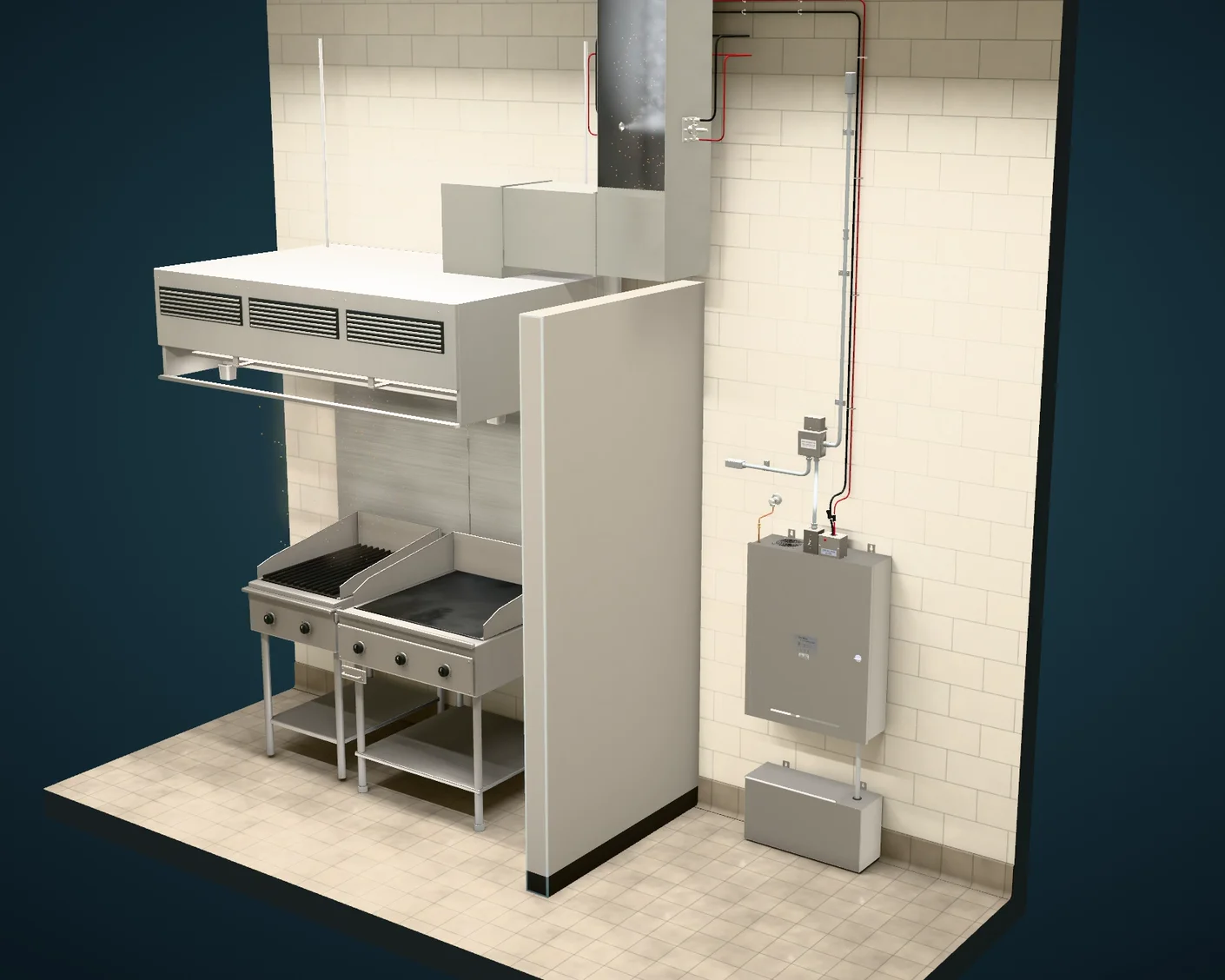
From your building’s cold-water line to the mist in the duct, in the 3D model’s own walkthrough. Open any step to see it.
Cold water comes in
A 1/4-inch copper line brings your building’s cold water into the cabinet through its own shutoff valve.
Odor-neutralizing solution joins the water
As cold water passes through the brass injector, it draws odor-neutralizing solution from the container below.
Mixed solution inside the cabinet
Water and odor-neutralizing solution flow into a small mixing container. A float switch and delay timer control when it refills.
Air turns the solution into a fine mist
The compressor sends air through the black line. At each nozzle, air and solution combine to form a fine mist.
Delivered to your grease duct
A metering pump sends diluted solution through the red line to two nozzles in your grease duct. Compressed air travels alongside it through the black line.
Odors neutralized in the exhaust stream
Two opposing nozzles deliver an odor-neutralizing mist inside the duct. The exhaust carries the mist toward the fan, giving it time to act on cooking odors.
Runs on your schedule
Cooking periods are set in the IDEC SmartRelay so MOAS runs during those times. The exhaust-fan interlock prevents operation whenever the fan is off.
Warns before it runs dry
The low-solution alarm monitors the container through a pressure-sensing tube. When solution runs low, the cabinet buzzer sounds and the red light on top illuminates until the container is refilled.
Plan the installation
Coordinate nozzle placement, utilities, the exhaust-fan interlock and access with your project team.
- Cabinet
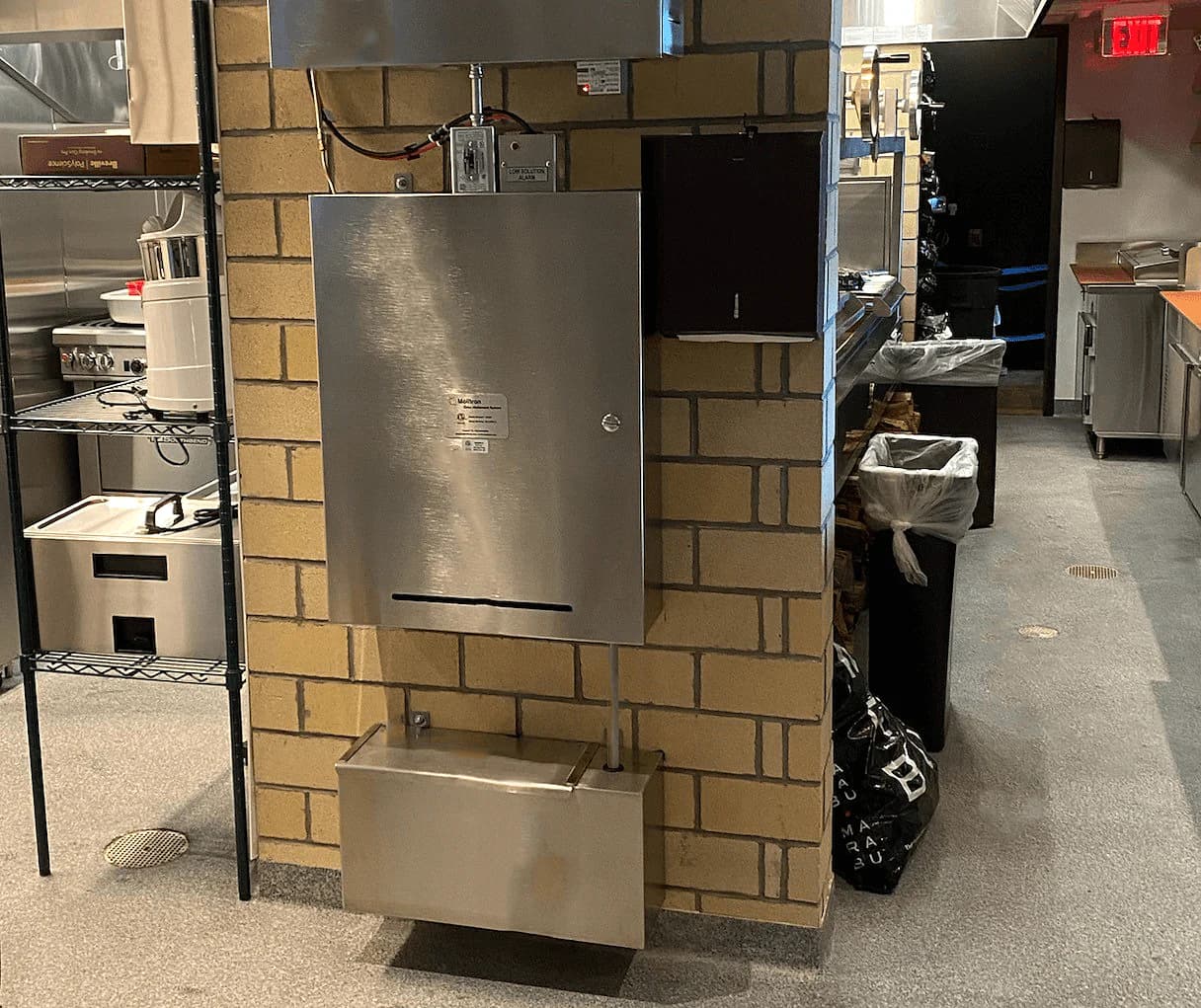
- Wall-mounted, 18-gauge stainless steel: 24″ W × 32″ H × 8″ D, about 100 lb. Only the two nozzles go in the duct.
- Solution container
- The standard external container holds up to 10 gallons. An internal cabinet buzzer signals low solution.
- Power
- A dedicated 120 VAC, 20 A circuit for MOAS, through the exhaust-fan interlock.
- Water
- A ¼″ copper cold-water supply, 80 PSI maximum, with its own shutoff valve.
- Location
- Any convenient, ventilated spot near kitchen staff, where they can reach the container and hear the alarm.
- Configuration
- Each system is evaluated, configured and calibrated for its project.
Easy to own
What owning MOAS involves day to day, from the same walkthrough your staff can watch in 3D.
Maintain the solution level
The container holds up to 10 gallons of odor-neutralizing solution. Slide the lid forward to check the level or refill it; the tubes stay in place. Refill immediately when the alarm sounds, at approximately two gallons remaining.
It tells you when it’s low
When solution runs low, a buzzer inside the cabinet sounds and the red light on top illuminates. Place the cabinet where staff can hear the alarm during working hours.
Keep the nozzles clear
Once a month, while the MOAS and the exhaust fan are running, press and release the rear cleaning button on each nozzle several times. This helps keep grease buildup from obstructing the nozzle tips, so they can continue delivering mist into the exhaust stream.
The MOAS runs on your schedule
Set cooking periods in the smart relay so MOAS runs during those times. The exhaust-fan interlock prevents operation when the fan is off.
Service made easy
For maintenance or repair, authorized technicians or trained staff can open the cabinet door and access the system’s components directly.
Specifications
Final selection depends on airflow, cooking equipment, discharge and project requirements.
| Capacity | Up to 6,000 CFM per system (two misting nozzles) |
|---|---|
| Odor reduction | Up to 95%; actual results vary by project conditions |
| Smoke reduction | Up to 50%; actual results vary by project conditions |
| Method | Atomizes Odor Neutralizer Solution through remote misting nozzles |
| Cabinet | 18 Ga stainless steel — 24″ W × 32″ H × 8″ D, ~100 lbs |
| Project electrical requirement | 120 VAC, 20 A dedicated circuit for MOAS |
| Listed equipment rating | 120 V, 3.5 A, 60 Hz |
| Water | ¼″ copper cold water supply, 80 PSI maximum |
| Listing | ETL Listed for the U.S. and Canada · Intertek Report 101453585DEN-002 · UL 197 · CSA C22.2 No. 109 |
| Application | Project-specific evaluation, configuration, and calibration |
Performance figures are qualified as up-to values. Results vary with the cooking process, hood performance, exhaust configuration, installation, dwell time and system calibration.
Documents
Current planning and service references for the project team.
- Product brochureMolitron Odor Abatement System Product BrochureVersion 1.0 — September 28, 2026. System dimensions, remote nozzle layout, building connections, and qualified performance information.Download
- Planning guideMOAS Engineering & Installation Planning Guide (Rev A)Plan the cabinet location, nozzles, utilities, tubing, service access and exhaust-fan interlock. Not for construction.DownloadRead before using this PDF
The July 2026 Rev A PDF contains earlier requirements: a 15 A circuit and an optional solution container. Current confirmed information specifies a dedicated 120 VAC, 20 A circuit for MOAS, 80 PSI maximum cold-water pressure, and a standard external solution container holding up to 10 gallons. Contact Molitron to confirm current project requirements before using this planning reference.
Equipment and installations
Photographs of MOAS cabinets and installed systems. Select a photo to enlarge it.
Where MOAS is installed
Selected installation history across restaurants, airports, hotels and other commercial kitchens.
- Farmer's Table
- UNO K Street, DC
Names identify installation history and do not imply endorsement, sponsorship, or a current commercial relationship.
See all installation history












EPFA dry filtration
Need smoke and grease filtration too?
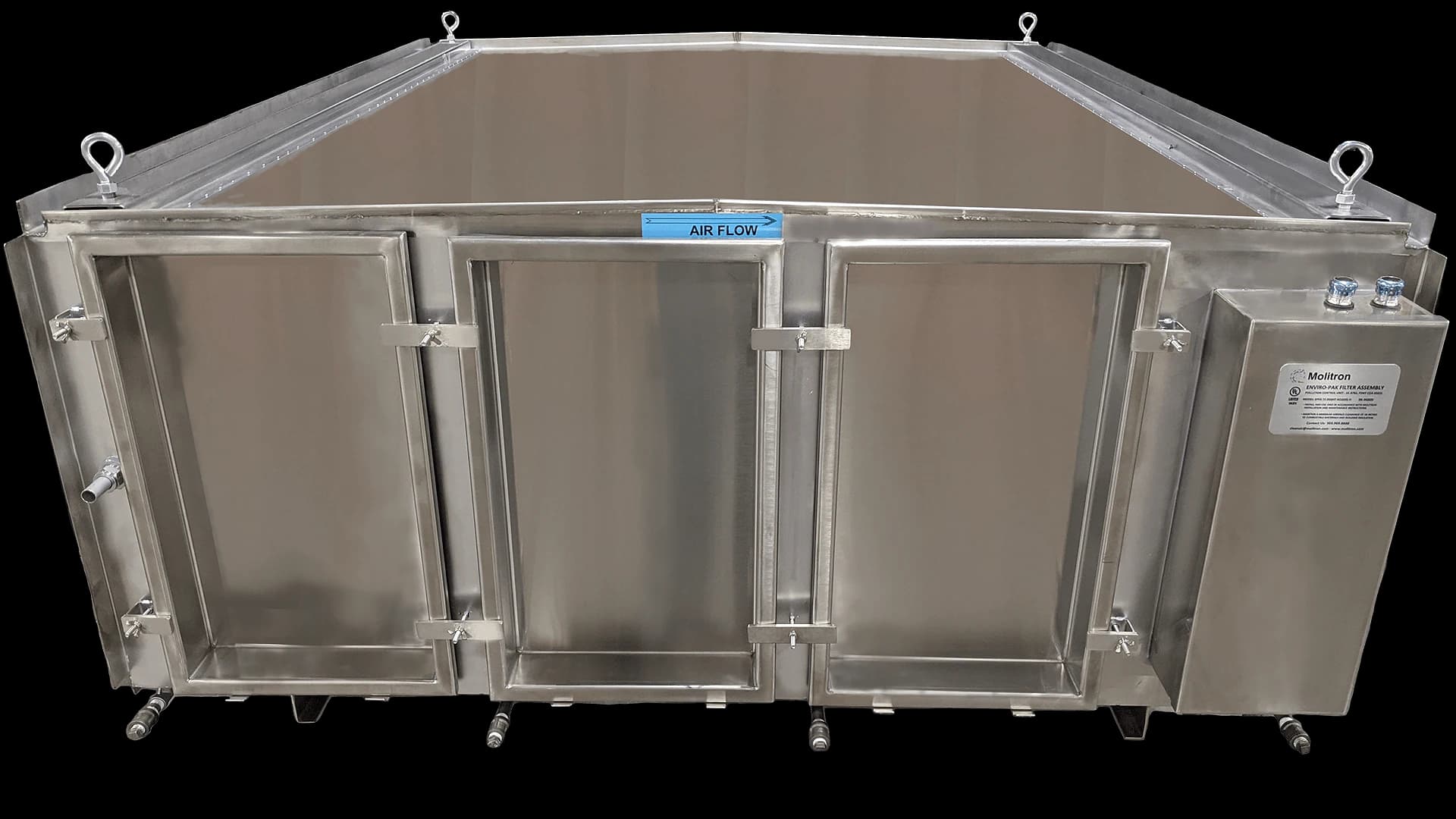
EPFA filters smoke particulate and grease vapor from light-duty kitchen exhaust in three dry stages. Some projects use both: EPFA filters the exhaust and MOAS treats the odor.
Plan a project with MOAS.
Share your location, cooking equipment and exhaust layout. We reply the same business day, and within one business day at most.